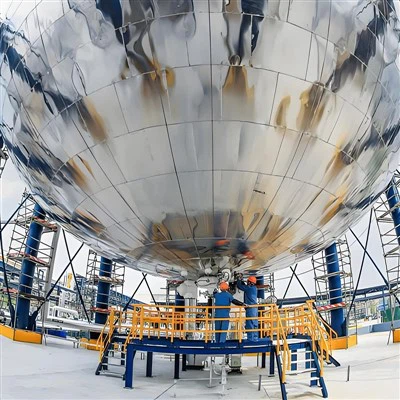
As a supplier of CO2 liquefaction plants, I understand the importance of accurately evaluating the performance of these facilities. A well - performing CO2 liquefaction plant not only ensures efficient production but also contributes to environmental sustainability by effectively capturing and storing carbon dioxide. In this blog, I will share some key aspects to consider when evaluating the performance of a CO2 liquefaction plant.
Energy Efficiency
Energy efficiency is one of the most critical factors in evaluating a CO2 liquefaction plant. The process of liquefying CO2 requires a significant amount of energy, mainly for compression, cooling, and separation. A more energy - efficient plant will consume less electricity or other energy sources, resulting in lower operating costs and a smaller carbon footprint.
Compression Efficiency
The compression stage is a major energy consumer in a CO2 liquefaction plant. High - quality compressors with advanced designs can reduce the energy required to compress CO2 gas to the necessary pressure for liquefaction. When evaluating a plant, look at the compressor's isentropic efficiency. A higher isentropic efficiency means that the compressor can convert more of the input energy into useful compression work, minimizing energy losses.
Cooling System Performance
The cooling system is also essential for energy efficiency. The plant needs to cool the compressed CO2 gas to a temperature where it can be liquefied. Efficient cooling technologies, such as multi - stage refrigeration systems or the use of waste heat recovery, can significantly reduce the energy consumption of the cooling process. For example, some plants use ammonia or propane as refrigerants in a cascade refrigeration system, which can achieve lower temperatures with less energy input.
Product Quality
The quality of the liquefied CO2 produced by the plant is another important performance indicator. High - quality liquid CO2 is essential for various applications, such as food and beverage carbonation, industrial cleaning, and enhanced oil recovery.
Purity
The purity of the liquid CO2 is a key quality parameter. Impurities in the CO2, such as water, nitrogen, oxygen, and hydrocarbons, can affect its performance in different applications. A good CO2 liquefaction plant should be able to produce liquid CO2 with a high purity level, typically above 99%. This often requires effective purification processes, such as adsorption, distillation, or membrane separation, to remove impurities from the feed gas.
Temperature and Pressure Control
Maintaining the correct temperature and pressure of the liquid CO2 during storage and transportation is crucial for product quality. The plant should have reliable temperature and pressure control systems to ensure that the liquid CO2 remains in a stable state. Fluctuations in temperature or pressure can lead to vaporization or the formation of solid CO2 (dry ice), which can damage equipment and reduce the quality of the product.
Production Capacity
The production capacity of a CO2 liquefaction plant determines how much liquid CO2 it can produce within a given time frame. This is an important factor for customers who have specific production requirements.
Design Capacity vs. Actual Capacity
When evaluating a plant, it is important to compare the design capacity with the actual production capacity. The design capacity is the maximum amount of liquid CO2 the plant is designed to produce under ideal conditions. However, in real - world operations, the actual capacity may be lower due to factors such as equipment downtime, feed gas quality variations, and maintenance requirements. A well - performing plant should be able to operate close to its design capacity most of the time.
Scalability
Scalability is also an important consideration, especially for customers who may need to increase their production capacity in the future. A good CO2 liquefaction plant should be designed with scalability in mind, allowing for relatively easy expansion of its production capacity by adding additional compressors, coolers, or purification units.
Reliability and Maintenance
The reliability of a CO2 liquefaction plant is crucial for continuous production. Downtime can result in lost production, increased costs, and potential damage to the reputation of the plant operator.
Equipment Reliability
The reliability of the plant's equipment, such as compressors, pumps, valves, and heat exchangers, is a key factor. High - quality equipment with a proven track record of reliability should be used in the plant. Regular maintenance and inspection of the equipment can also help prevent breakdowns and extend the equipment's lifespan.
Maintenance Requirements
The ease of maintenance is another important aspect. A plant with simple and accessible equipment design will be easier and cheaper to maintain. Look for features such as modular design, which allows for quick replacement of components, and remote monitoring systems, which can detect potential problems before they cause major breakdowns.
Environmental Impact
In today's world, the environmental impact of industrial processes is a significant concern. A CO2 liquefaction plant should be evaluated based on its environmental performance.
Emissions
The plant should minimize emissions of greenhouse gases and other pollutants. In addition to capturing and liquefying CO2, the plant should also control emissions from other sources, such as the combustion of fossil fuels for energy generation. Some plants use renewable energy sources, such as solar or wind power, to reduce their carbon footprint.
Waste Management
Proper waste management is also important. The plant should have a system in place to handle any waste generated during the production process, such as spent adsorbents or waste refrigerants. Recycling and reusing waste materials can reduce the environmental impact of the plant.


Economic Performance
Finally, the economic performance of the CO2 liquefaction plant is a key consideration for both the plant operator and potential investors.
Capital Costs
The initial capital investment required to build the plant is an important economic factor. When evaluating a plant, compare the capital costs of different designs and technologies. However, it is important to consider the long - term benefits and operating costs as well. A more expensive plant with higher energy efficiency and better product quality may have a lower total cost of ownership over its lifespan.
Operating Costs
The operating costs of the plant, including energy consumption, labor, maintenance, and raw material costs, also need to be evaluated. A well - designed plant should have low operating costs, which can improve its profitability. For example, a plant with high energy efficiency will have lower electricity bills, and a plant with reliable equipment will require less maintenance and spare parts.
Conclusion
Evaluating the performance of a CO2 liquefaction plant requires a comprehensive assessment of multiple factors, including energy efficiency, product quality, production capacity, reliability, environmental impact, and economic performance. As a [supplier of CO2 liquefaction plants], we are committed to providing high - performance plants that meet the diverse needs of our customers. If you are interested in our Liquid CO2 Refinery Plant, Carbon Dioxide Liquefaction Plant, or Liquid Co2 Production Plant, please feel free to contact us for more information and to discuss your specific requirements. We look forward to the opportunity to work with you and help you achieve your CO2 liquefaction goals.
References
- Smith, J. (2018). Energy - efficient CO2 liquefaction technologies. Journal of Industrial and Engineering Chemistry Research, 57(23), 7789 - 7798.
- Johnson, A. (2019). Quality control in CO2 liquefaction plants. International Journal of Chemical Engineering, 2019, 1 - 10.
- Brown, C. (2020). Environmental impact assessment of CO2 liquefaction processes. Environmental Science and Technology, 54(12), 7213 - 7220.