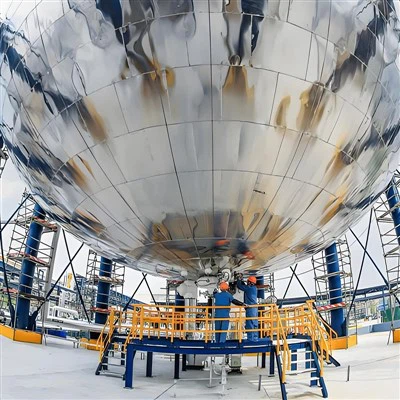
As a supplier of CO2 Recovery Units, I've witnessed firsthand the growing importance of carbon dioxide recovery in today's environmentally - conscious world. CO2 recovery units play a crucial role in capturing and purifying carbon dioxide from various industrial processes, which not only helps in reducing greenhouse gas emissions but also provides a valuable resource for many industries. However, these units also generate by - products that need to be managed properly to ensure the overall efficiency and environmental friendliness of the operation.
Understanding the By - products of a CO2 Recovery Unit
Before delving into how to handle the by - products, it's essential to understand what they are. The by - products of a CO2 recovery unit can vary depending on the source of the CO2 and the specific recovery process used.
Water
One of the most common by - products is water. During the process of CO2 recovery, water vapor is often removed from the gas stream. This is because water can interfere with the purification and liquefaction of CO2. For example, in a Carbon Dioxide Capture Plant, the gas stream may contain significant amounts of water vapor, especially if it comes from combustion processes or fermentation.
Impurities
There are also various impurities that are separated from the CO2. These can include nitrogen, oxygen, argon, and trace amounts of other gases such as sulfur dioxide and volatile organic compounds (VOCs). The presence of these impurities can affect the quality of the recovered CO2, so they need to be removed during the purification process.
Solid Residues
In some cases, there may be solid residues. For instance, if the CO2 source contains particulate matter, such as in flue gas from a coal - fired power plant, these particles will be filtered out during the recovery process. Additionally, some chemical processes used in CO2 recovery may produce solid by - products.
Handling Water By - products
The water removed from the CO2 stream can be treated and reused in several ways.
Recycling for Industrial Processes
If the water is relatively clean, it can be recycled back into the industrial process from which the CO2 was captured. For example, in a fermentation process where CO2 is a by - product, the recovered water can be used for dilution or as part of the fermentation medium. This not only reduces the demand for fresh water but also minimizes the waste generated.


Treatment and Discharge
If the water contains contaminants, it needs to be treated before discharge. Simple filtration can remove large particles, while more advanced treatment methods such as reverse osmosis or ion exchange can be used to remove dissolved salts and other impurities. Once treated, the water can be safely discharged into the environment or reused for non - critical applications such as cooling water in industrial facilities.
Managing Impurities
The handling of impurities separated from the CO2 stream depends on their nature and concentration.
Venting
For some non - harmful impurities such as nitrogen and oxygen, they can be vented to the atmosphere in most cases. However, this should be done in accordance with local environmental regulations. Before venting, it's important to ensure that the concentration of any potentially harmful trace gases is below the allowable limits.
Capture and Utilization
Some impurities, such as sulfur dioxide, can be captured and used in other industrial processes. Sulfur dioxide can be converted into sulfuric acid, which is a valuable industrial chemical used in many sectors, including the fertilizer and chemical manufacturing industries.
Storage
In some cases, impurities may be stored for further processing or disposal. For example, if there is a large amount of argon separated from the CO2 stream, it can be stored in tanks until it can be sold to industries that use argon, such as the welding and electronics industries.
Dealing with Solid Residues
The solid residues generated in a CO2 recovery unit need to be managed carefully to prevent environmental pollution.
Landfill Disposal
If the solid residues are non - hazardous, they can be disposed of in a landfill. However, this should be the last resort as landfill space is limited and there are environmental concerns associated with landfill disposal.
Recycling
Some solid residues can be recycled. For example, if the particulate matter removed from the flue gas contains metals, these metals can be recovered through a recycling process. This not only reduces the waste sent to landfills but also conserves natural resources.
Incineration
In some cases, solid residues can be incinerated if they are combustible. However, this process needs to be carefully controlled to ensure that no harmful emissions are released into the atmosphere. Incineration can also reduce the volume of the solid waste, making it easier to handle and dispose of.
The Role of CO2 Recovery and Production Plants
CO2 Recovery And Production Plants are designed to optimize the CO2 recovery process and manage the by - products effectively. These plants are equipped with advanced separation and purification technologies that can efficiently separate CO2 from other gases and impurities.
Process Optimization
By optimizing the process parameters, such as temperature, pressure, and flow rate, the amount of by - products generated can be minimized. For example, adjusting the temperature during the purification process can improve the separation efficiency of CO2 from other gases, reducing the amount of impurities that need to be handled.
Integration with Other Processes
CO2 recovery and production plants can be integrated with other industrial processes to make better use of the by - products. For instance, the recovered water can be used in a nearby cooling tower, and the separated impurities can be fed into other chemical processes for further utilization.
The Importance of Proper By - product Handling
Proper handling of the by - products of a CO2 recovery unit is not only important for environmental reasons but also for the economic viability of the operation.
Environmental Benefits
By managing the by - products effectively, we can reduce the environmental impact of CO2 recovery. This includes minimizing water pollution, reducing air emissions, and conserving natural resources. It also helps in meeting the increasingly strict environmental regulations around the world.
Economic Advantages
Reusing and recycling the by - products can generate additional revenue. For example, selling the recovered argon or sulfuric acid can offset some of the operating costs of the CO2 recovery unit. Additionally, reducing the waste disposal costs can improve the overall profitability of the operation.
Conclusion
As a supplier of CO2 Recovery Unit, I understand the challenges and opportunities associated with handling the by - products of these units. By implementing proper management strategies for water, impurities, and solid residues, we can ensure that the CO2 recovery process is both environmentally friendly and economically viable.
If you are interested in learning more about our CO2 recovery units and how we can help you manage the by - products effectively, we encourage you to reach out to us for a detailed discussion. Our team of experts is ready to assist you in finding the best solutions for your specific needs.
References
- Smith, J. D., & Johnson, A. B. (2018). Carbon Dioxide Capture and Utilization: Technologies and Applications. Elsevier.
- Doe, R. M. (2020). Industrial Water Treatment: Principles and Practice. Wiley.
- Green, M. C., & Brown, L. K. (2019). Waste Management in the Chemical Industry. CRC Press.