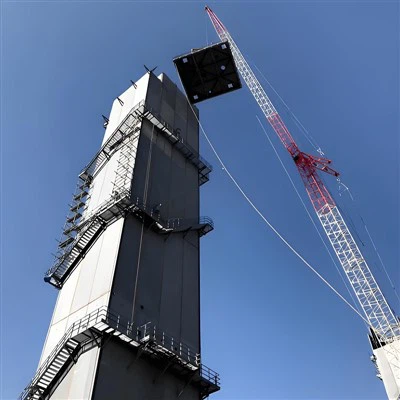
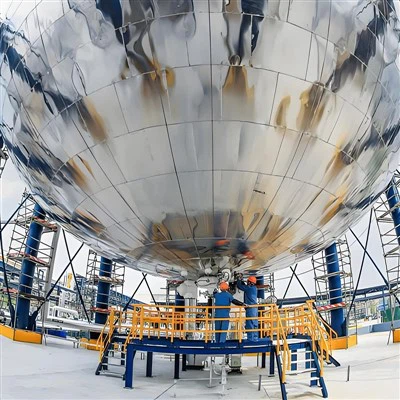
The cryogenic air separation unit (ASU) has long been a cornerstone in industries that require high - purity gases such as oxygen, nitrogen, and argon. As a cryogenic ASU supplier, I've witnessed firsthand the remarkable evolution of this technology and the numerous factors that are shaping its future. In this blog, I'll explore how future development trends will impact the application of cryogenic ASUs.
Energy Efficiency and Sustainability
One of the most significant trends in the industrial world is the increasing focus on energy efficiency and sustainability. With the rising cost of energy and growing environmental concerns, industries are constantly seeking ways to reduce their carbon footprint. Cryogenic ASUs are energy - intensive, consuming large amounts of electricity for air compression, refrigeration, and separation processes.
Future development in this area will likely lead to the improvement of energy - efficient components. For example, advanced compressors with better isentropic efficiency can reduce the energy required for air compression. New heat exchanger designs, such as printed circuit heat exchangers (PCHEs), offer higher heat transfer coefficients, enabling more efficient heat exchange and thus reducing energy consumption.
In addition, the integration of renewable energy sources is becoming a promising avenue. Cryogenic ASUs could be paired with solar or wind power plants. During periods of high renewable energy production, the ASU can operate at full capacity, storing the produced gases for later use. This not only reduces reliance on the grid but also contributes to a more sustainable energy ecosystem. For more information on the equipment that can be used in such energy - efficient setups, you can visit Cryogenic Equipment.
Digitalization and Automation
The era of Industry 4.0 has brought about a wave of digital transformation in manufacturing and industrial processes. Cryogenic ASUs are no exception. Digitalization and automation will have a profound impact on the application of cryogenic ASUs.
Advanced sensors can be installed throughout the ASU to monitor various parameters such as temperature, pressure, flow rate, and purity in real - time. These sensors can provide accurate data that is crucial for process optimization. For instance, by continuously monitoring the purity of the produced gases, the ASU can adjust its operating conditions to ensure consistent product quality.


Automation systems can take over routine tasks such as start - up, shutdown, and load adjustment. With the use of artificial intelligence and machine learning algorithms, these systems can learn from historical data and predict potential failures or malfunctions. Predictive maintenance can be carried out based on these predictions, reducing unplanned downtime and maintenance costs.
Remote monitoring and control are also becoming more common. Operators can access the ASU's control system from anywhere in the world via the Internet. This allows for quick response to emergencies and efficient management of multiple ASU installations. The digitalized and automated operation of cryogenic ASUs will lead to higher productivity, lower labor costs, and improved safety. You can learn more about the overall concept of cryogenic ASUs in Cryogenic Air Separation Unit.
Miniaturization and Modularization
In many industries, there is a growing demand for smaller, more flexible cryogenic ASUs. Miniaturization and modularization are emerging trends that will change the application scenarios of cryogenic ASUs.
Miniature cryogenic ASUs can be used in on - site gas generation for small - scale industries or laboratories. They offer the advantage of lower capital investment and reduced floor space requirements. For example, a small medical facility may need a continuous supply of high - purity oxygen. A mini cryogenic ASU can be installed on - site to meet this demand, eliminating the need for regular oxygen cylinder deliveries.
Modular cryogenic ASUs are composed of pre - fabricated modules that can be easily assembled and disassembled. This modular design allows for quick installation and commissioning, as well as easy expansion or relocation. If a company's gas demand increases, additional modules can be added to the existing ASU. Conversely, if the company decides to move to a new location, the modular ASU can be disassembled and reinstalled at the new site with relative ease.
Market Expansion and New Applications
As technology advances, the market for cryogenic ASUs is expanding, and new applications are emerging. Traditionally, cryogenic ASUs have been mainly used in the steel, chemical, and petrochemical industries. However, in recent years, there has been a growing demand in other sectors.
The electronics industry requires high - purity nitrogen for semiconductor manufacturing. The use of nitrogen helps to prevent oxidation and improve the quality of semiconductor products. Cryogenic ASUs can produce the large quantities of high - purity nitrogen needed for this process.
In the food and beverage industry, cryogenic ASUs are used for food freezing and preservation. Liquid nitrogen can be used to rapidly freeze food products, preserving their freshness and quality. The pharmaceutical industry also has a need for high - purity gases for various processes such as drug synthesis and packaging.
Moreover, the development of new technologies such as fuel cells and carbon capture and storage (CCS) is creating new opportunities for cryogenic ASUs. Fuel cells require a continuous supply of high - purity oxygen, and cryogenic ASUs can be a reliable source. In CCS, cryogenic separation can be used to capture carbon dioxide from industrial emissions. To understand the application of cryogenic ASUs in large - scale gas production for these industries, you can refer to Gas Cryogenic Air Separation Plant.
Conclusion
The future development trends in energy efficiency, digitalization, miniaturization, and market expansion will significantly affect the application of cryogenic ASUs. As a cryogenic ASU supplier, we are committed to keeping up with these trends and providing our customers with state - of - the - art solutions.
If you are in need of a cryogenic ASU for your business, whether it's for a large - scale industrial application or a small - scale on - site gas generation, we are here to help. Our team of experts can work with you to understand your specific requirements and design a customized solution. We can provide you with the latest technology, energy - efficient equipment, and reliable after - sales service. Contact us today to start a procurement negotiation and take your business to the next level.
References
- Smith, J. (2020). Energy - efficient cryogenic air separation technologies. Journal of Industrial and Engineering Chemistry.
- Johnson, M. (2021). Digital transformation in cryogenic air separation units. Industrial Automation Review.
- Brown, R. (2019). Miniaturization and modularization of cryogenic gas separation systems. Proceedings of the International Gas Processing Conference.