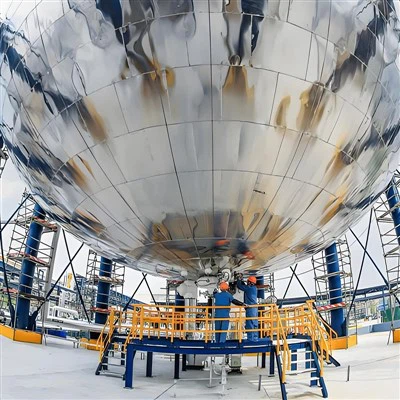
In the era of increasing environmental awareness and the pursuit of sustainable development, the importance of carbon dioxide (CO2) recovery cannot be overstated. As a leading CO2 Recovery Unit supplier, we have extensive experience in designing, manufacturing, and operating these units. In this blog, we will explore the best practices for operating a CO2 Recovery Unit, which can help you achieve high - efficiency, energy - saving, and reliable CO2 recovery operations.
1. Pre - operational Considerations
1.1 Feed Gas Analysis
Before starting the CO2 Recovery Unit, a comprehensive analysis of the feed gas is essential. The feed gas composition can vary greatly depending on the source, such as flue gas from power plants, fermentation gas from breweries, or exhaust gas from chemical processes. Key parameters to analyze include the concentration of CO2, the presence of impurities (e.g., sulfur compounds, nitrogen oxides, particulate matter), and the temperature and pressure of the feed gas. This information is crucial for determining the appropriate recovery process and ensuring the long - term stability of the unit. For instance, if the feed gas contains a high concentration of sulfur compounds, additional desulfurization steps may be required to prevent corrosion and catalyst poisoning in the recovery unit.
1.2 Equipment Inspection
Thoroughly inspect all equipment in the CO2 Recovery Unit, including compressors, absorbers, strippers, heat exchangers, and valves. Check for any signs of wear, damage, or leakage. Ensure that all instruments and control systems are calibrated and functioning properly. For example, pressure sensors and temperature gauges should provide accurate readings to maintain optimal operating conditions. Any faulty equipment should be repaired or replaced before startup to avoid unexpected shutdowns during operation.
1.3 Safety Measures
Safety is of utmost importance in operating a CO2 Recovery Unit. Install appropriate safety devices such as pressure relief valves, emergency shutdown systems, and gas detectors. Provide proper training to all operators on safety procedures, including handling of CO2, which can be hazardous in high concentrations. Establish an emergency response plan in case of leaks, fires, or other accidents.
2. Operational Best Practices
2.1 Process Control
Maintain strict control over the key process parameters, such as temperature, pressure, flow rate, and solvent concentration. For example, in an absorption - based CO2 recovery process, the temperature of the absorber and stripper should be carefully regulated. A lower absorber temperature usually favors CO2 absorption, while a higher stripper temperature promotes CO2 desorption. The pressure in the system also affects the efficiency of the recovery process. By continuously monitoring and adjusting these parameters, you can optimize the CO2 recovery rate and reduce energy consumption. Advanced control systems, such as programmable logic controllers (PLCs) and distributed control systems (DCSs), can be used to automate the process control and improve the stability of the operation.
2.2 Solvent Management
If your CO2 Recovery Unit uses a solvent for absorption, proper solvent management is crucial. Regularly analyze the solvent quality, including its concentration, degradation products, and impurity content. Replenish or replace the solvent as needed to maintain its absorption capacity. Minimize solvent losses through processes such as evaporation and leakage. For example, use efficient solvent recovery systems to recapture any solvent that is carried over with the product CO2 or vented gas.


2.3 Energy Efficiency
Energy consumption is a major cost factor in operating a CO2 Recovery Unit. Implement energy - saving measures such as heat integration, where the heat from the high - temperature streams is transferred to the low - temperature streams. For instance, the heat from the stripping process can be used to pre - heat the feed gas or the solvent. Use energy - efficient equipment, such as high - efficiency compressors and heat exchangers. Optimize the process conditions to reduce the energy requirements for CO2 capture and separation. For example, adjusting the operating pressure and temperature can significantly affect the energy consumption of the unit.
2.4 Monitoring and Maintenance
Establish a regular monitoring and maintenance schedule for the CO2 Recovery Unit. Continuously monitor the performance of the unit, including the CO2 recovery rate, product purity, and energy consumption. Use advanced monitoring techniques, such as online analyzers and sensors, to detect any deviations from the normal operation. Conduct preventive maintenance, including equipment cleaning, lubrication, and replacement of worn - out parts. This can help prevent unexpected breakdowns and extend the service life of the equipment.
3. Post - operational Practices
3.1 Shutdown Procedures
When shutting down the CO2 Recovery Unit, follow proper shutdown procedures. Gradually reduce the load on the unit, depressurize the system, and drain any liquids. Flush the equipment with an appropriate medium to remove any remaining CO2 or contaminants. Isolate the unit from the feed gas source and the product storage system. Proper shutdown procedures can help protect the equipment from damage and ensure safety during the shutdown period.
3.2 Equipment Storage and Preservation
If the CO2 Recovery Unit is to be shut down for an extended period, proper storage and preservation methods should be adopted. Protect the equipment from corrosion, dust, and moisture. For example, fill the equipment with an inert gas or a corrosion - inhibiting solution. Cover the equipment with protective covers to prevent physical damage.
4. Application - specific Considerations
4.1 Different Feed Gas Sources
The best practices may vary depending on the source of the feed gas. For example, when recovering CO2 from flue gas of a coal - fired power plant, the feed gas usually contains a large amount of particulate matter and sulfur compounds. Therefore, additional pre - treatment steps, such as dust removal and desulfurization, are necessary. On the other hand, for fermentation gas from breweries, the main impurity is often ethanol vapor, which can be removed by condensation or adsorption.
4.2 Product Requirements
The quality requirements of the recovered CO2 also affect the operation of the unit. If the recovered CO2 is to be used for food and beverage applications, it must meet strict purity standards, with low levels of impurities such as sulfur compounds, nitrogen oxides, and volatile organic compounds. In this case, additional purification steps, such as polishing and filtration, may be required.
5. Our Products and Services
As a professional CO2 Recovery Unit supplier, we offer a wide range of CO2 Recovery And Production Plants. Our Co2 Manufacturing Plant is designed with advanced technology and high - quality components to ensure high - efficiency and reliable CO2 recovery. Our Co2 Production Plant can be customized according to your specific feed gas composition and product requirements.
We also provide comprehensive services, including pre - sales consultation, installation and commissioning, and after - sales maintenance. Our team of experts can help you select the most suitable CO2 Recovery Unit for your application and provide you with professional operating guidance. If you are interested in our products or services, we welcome you to contact us for procurement negotiations. We will strive to provide you with the best solutions and the highest - quality products.
References
- Doe, J. (2020). "Advanced CO2 Recovery Technologies". Journal of Environmental Science and Technology.
- Smith, A. (2019). "Optimization of CO2 Recovery Processes". International Journal of Green Energy.
- Brown, C. (2018). "Safety in CO2 Recovery Unit Operation". Chemical Engineering Safety Review.