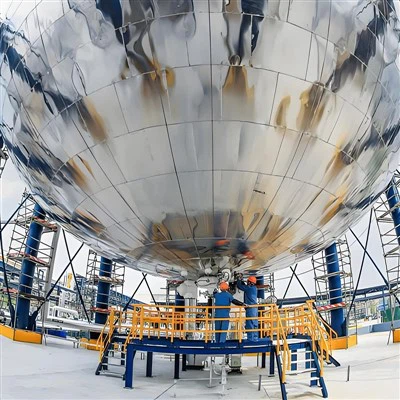
As a supplier of oxygen liquid plants, I understand that when businesses consider investing in such a facility, a comprehensive cost - benefit analysis is crucial. This analysis helps in making informed decisions, weighing the initial outlays against the long - term returns. In this blog, I'll delve into the cost - benefit aspects of an oxygen liquid plant.
Costs Associated with an Oxygen Liquid Plant
Capital Costs
The first and most significant cost is the capital expenditure required to set up an oxygen liquid plant. This includes the purchase of equipment such as air compressors, distillation columns, heat exchangers, and storage tanks. The Liquid Oxygen Production Plant is a complex system that demands high - quality components to ensure efficient and safe operation. The cost of these components can vary widely depending on the capacity of the plant, the technology used, and the brand. For a medium - sized plant with a daily production capacity of around 50 tons of liquid oxygen, the capital cost can range from several million dollars.
Land acquisition is another capital cost. An oxygen liquid plant requires a significant amount of space for the installation of equipment, storage facilities, and safety buffers. The cost of land depends on the location, with industrial areas near major transportation routes or customer bases often being more expensive.


Operating Costs
Operating costs are the ongoing expenses incurred during the day - to - day running of the plant. Energy consumption is one of the largest operating costs. The process of liquefying oxygen is energy - intensive, as it involves compressing air, cooling it to extremely low temperatures, and separating the oxygen from other components. The electricity bill for running the compressors, refrigeration systems, and other equipment can be substantial. Additionally, the cost of raw materials, mainly air, is negligible, but the cost of purifying and processing it adds to the overall operating expenses.
Labor costs also contribute to the operating expenses. A well - trained workforce is required to operate and maintain the plant safely and efficiently. This includes operators, technicians, and management personnel. The salaries, benefits, and training costs for these employees can be a significant part of the annual budget.
Maintenance and repair costs are inevitable. The equipment in an oxygen liquid plant is subject to wear and tear, and regular maintenance is necessary to ensure its reliability and longevity. This includes routine inspections, replacement of parts, and major overhauls. The cost of spare parts and the services of maintenance contractors can be a considerable expense over the life of the plant.
Regulatory and Compliance Costs
Oxygen liquid plants are subject to strict regulatory requirements. These regulations are in place to ensure the safety of the plant, its employees, and the surrounding environment. Obtaining the necessary permits and licenses can be a time - consuming and costly process. Compliance with environmental regulations, such as emissions control and waste management, also incurs additional costs. For example, the plant may need to invest in pollution control equipment to meet air quality standards.
Benefits of an Oxygen Liquid Plant
Revenue Generation
One of the primary benefits of an oxygen liquid plant is the potential for revenue generation. Liquid oxygen has a wide range of applications in various industries. In the healthcare sector, it is used for medical treatments, especially in hospitals and clinics. The industrial sector also uses liquid oxygen in processes such as metal cutting, welding, and chemical production. By supplying high - quality liquid oxygen to these industries, the plant can generate a steady stream of income.
The Liquid Oxygen (LOX) Plant can also offer value - added services, such as customized delivery options and technical support. This can help in attracting more customers and increasing market share, thereby boosting revenue.
Cost Savings for Customers
For customers, purchasing liquid oxygen from a local plant can result in cost savings. They can avoid the high transportation costs associated with importing liquid oxygen from distant sources. Additionally, having a reliable local supply can reduce the risk of supply disruptions, which can be costly for industries that rely on a continuous supply of oxygen.
Environmental Benefits
Compared to some other methods of oxygen production, an oxygen liquid plant can have environmental benefits. The process of liquefying oxygen from air is a relatively clean technology, with minimal emissions. By using advanced purification and separation techniques, the plant can produce high - purity oxygen with low levels of contaminants. This can contribute to improving air quality in the surrounding area.
Strategic Advantages
Owning an oxygen liquid plant can provide strategic advantages for businesses. It gives them more control over their oxygen supply, reducing their dependence on external suppliers. This can be particularly important in times of supply shortages or price fluctuations in the oxygen market. Moreover, having an in - house oxygen production facility can enhance the company's reputation as a reliable and self - sufficient supplier in the industry.
Cost - Benefit Analysis
To conduct a comprehensive cost - benefit analysis, it is necessary to quantify the costs and benefits over the expected life of the plant. A common approach is to use techniques such as net present value (NPV) and internal rate of return (IRR).
The NPV method calculates the present value of all future cash inflows (benefits) and outflows (costs) of the project. A positive NPV indicates that the project is expected to generate more value than it costs, while a negative NPV suggests that the project may not be economically viable. The IRR is the discount rate at which the NPV of the project is zero. A higher IRR implies a more profitable project.
When calculating the benefits, it is important to consider factors such as market demand, price trends, and potential growth opportunities. For example, if the demand for liquid oxygen is expected to increase in the future due to the growth of the healthcare or industrial sectors, the revenue potential of the plant will be higher.
On the cost side, it is essential to account for all the capital, operating, and regulatory costs. Sensitivity analysis can also be performed to assess how changes in key variables, such as energy prices, labor costs, or market demand, can affect the cost - benefit ratio.
Conclusion
In conclusion, an oxygen liquid plant presents both significant costs and substantial benefits. While the initial capital investment and ongoing operating costs are high, the potential for revenue generation, cost savings for customers, environmental benefits, and strategic advantages make it an attractive option for many businesses.
As a supplier of Liquid Oxygen Manufacturing Plant, I am well - aware of the complexities involved in setting up and operating such a facility. If you are considering investing in an oxygen liquid plant, I encourage you to conduct a detailed cost - benefit analysis. Our team of experts can provide you with more information and support to help you make an informed decision. We are ready to engage in discussions and assist you in every step of the process, from plant design to commissioning. Contact us to start the procurement and negotiation process and explore how an oxygen liquid plant can benefit your business.
References
- Perry, R. H., & Green, D. W. (1997). Perry's Chemical Engineers' Handbook. McGraw - Hill.
- Process Safety Management of Highly Hazardous Chemicals. OSHA.
- Industrial Gases in Manufacturing. Compressed Gas Association.