Cryogenic equipment plays a crucial role in various industries, including healthcare, food processing, and energy production. As a leading supplier of cryogenic equipment, I've witnessed firsthand the diverse applications and unique features of different types of cryogenic tools. In this blog post, I'll explore the key differences between various cryogenic equipment, shedding light on their functions, advantages, and ideal use cases.
Cryogenic Storage Tanks
Cryogenic storage tanks are designed to store liquefied gases at extremely low temperatures. These tanks are essential for industries that rely on large - scale storage of gases such as liquid nitrogen, liquid oxygen, and liquid argon.
One of the primary differences in cryogenic storage tanks lies in their capacity. Small - scale storage tanks, often used in laboratories or small businesses, can hold anywhere from a few liters to a couple of hundred liters. These tanks are relatively compact and easy to install, making them suitable for on - site storage in limited spaces.


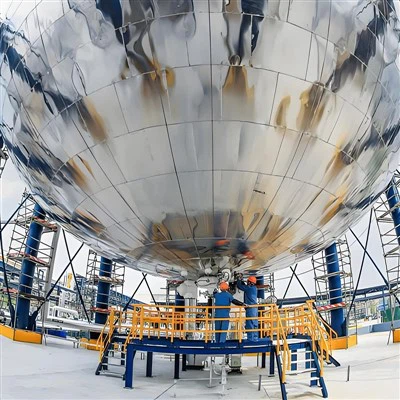
On the other hand, large - scale industrial storage tanks can have capacities ranging from thousands to hundreds of thousands of liters. These massive tanks are commonly found in chemical plants, refineries, and large medical facilities. They are built with robust insulation materials to minimize heat transfer and prevent the liquefied gas from boiling off.
Another significant difference is the type of insulation used. Some cryogenic storage tanks use vacuum insulation, which creates a near - perfect barrier against heat transfer. Vacuum - insulated tanks are highly efficient and can maintain the low temperature of the stored gas for extended periods. Other tanks may use foam insulation, which is less expensive but also less effective in terms of heat retention.
Cryogenic Pumps
Cryogenic pumps are used to transfer liquefied gases from storage tanks to other parts of a system, such as processing equipment or transportation vehicles. There are two main types of cryogenic pumps: centrifugal pumps and positive displacement pumps.
Centrifugal pumps work by using a rotating impeller to create a centrifugal force that moves the liquefied gas through the pump. These pumps are known for their high flow rates and are suitable for applications where large volumes of gas need to be transferred quickly. They are commonly used in industrial processes such as chemical manufacturing and power generation.
Positive displacement pumps, on the other hand, operate by trapping a fixed amount of liquefied gas and then forcing it out of the pump chamber. These pumps are ideal for applications that require precise control of the flow rate, such as in medical and laboratory settings. Positive displacement pumps can provide a consistent and accurate flow of gas, which is crucial for processes like cryosurgery and scientific research.
The materials used in cryogenic pumps also vary. Since the pumps operate at extremely low temperatures, they need to be made of materials that can withstand these conditions without becoming brittle or losing their mechanical properties. Stainless steel is a commonly used material due to its excellent cold - resistance and corrosion - resistance properties.
Cryogenic Valves
Cryogenic valves are used to control the flow of liquefied gases in a cryogenic system. There are several types of cryogenic valves, including ball valves, gate valves, and globe valves.
Ball valves are known for their quick - opening and closing action. They have a spherical disc that rotates to control the flow of gas. Ball valves are often used in applications where rapid shut - off is required, such as in emergency situations or when isolating sections of a cryogenic system.
Gate valves, on the other hand, use a sliding gate to control the flow. These valves provide a full - bore opening when fully open, which results in low pressure drop. Gate valves are suitable for applications where a straight - through flow of gas is needed, such as in long - distance pipelines.
Globe valves have a movable disk - type element that is perpendicular to the flow path. They offer precise control of the flow rate and are commonly used in applications where accurate regulation of the gas flow is necessary, such as in process control systems.
The sealing materials used in cryogenic valves are also critical. Since the valves need to prevent leakage of the liquefied gas at low temperatures, materials like PTFE (polytetrafluoroethylene) are often used due to their excellent sealing properties and low - temperature resistance.
Cryogenic Air Separation Plants
Cryogenic air separation plants are used to separate the components of air, such as nitrogen, oxygen, and argon, by cooling the air to cryogenic temperatures. There are different types of cryogenic air separation plants, each with its own unique features.
Gas Cryogenic Air Separation Plant is designed to produce high - purity gaseous products. These plants are commonly used in industries such as steelmaking, where large quantities of oxygen are required for the combustion process. They are highly efficient and can produce large volumes of gas at a relatively low cost.
Cryogenic Air Separation Nitrogen plants, as the name suggests, are specifically focused on producing nitrogen. Nitrogen is widely used in industries such as food packaging, electronics manufacturing, and chemical processing. These plants can produce nitrogen with high purity levels, making them suitable for applications where a clean and inert gas is required.
Cryogenic Air Separation Plant is a more general - purpose plant that can produce multiple products, including nitrogen, oxygen, and argon. These plants are often used in large - scale industrial complexes where a variety of gases are needed for different processes.
Advantages and Ideal Use Cases
Each type of cryogenic equipment offers unique advantages and is suitable for specific use cases.
Cryogenic storage tanks are essential for industries that require long - term storage of liquefied gases. Their large capacity and efficient insulation ensure that the gases can be stored safely and for extended periods. For example, in the healthcare industry, cryogenic storage tanks are used to store liquid nitrogen for cryopreservation of biological samples.
Cryogenic pumps are vital for transferring liquefied gases within a system. The choice between centrifugal and positive displacement pumps depends on the specific requirements of the application. Centrifugal pumps are great for high - volume transfer, while positive displacement pumps are ideal for precise flow control.
Cryogenic valves are crucial for regulating the flow of gases in a cryogenic system. Their different types offer various levels of control and flow characteristics, making them suitable for different operational needs.
Cryogenic air separation plants are the backbone of industries that rely on high - purity gases. Whether it's for steelmaking, food packaging, or electronics manufacturing, these plants can produce the required gases with high efficiency and quality.
Conclusion
In conclusion, understanding the differences between different types of cryogenic equipment is essential for choosing the right tools for your specific needs. As a cryogenic equipment supplier, I'm committed to providing high - quality products that meet the diverse requirements of our customers. Whether you're in the healthcare, food processing, or energy production industry, we have the expertise and the equipment to help you achieve your goals.
If you're interested in learning more about our cryogenic equipment or would like to discuss your specific requirements, please feel free to reach out to us. We're always ready to assist you in finding the best solutions for your business.
References
- "Cryogenic Engineering Handbook", edited by E. F. Crawley
- "Industrial Gases in Practice", by J. M. Smith and H. C. Van Ness
- "Cryogenic Technology: Principles and Applications", by S. W. Van Sciver