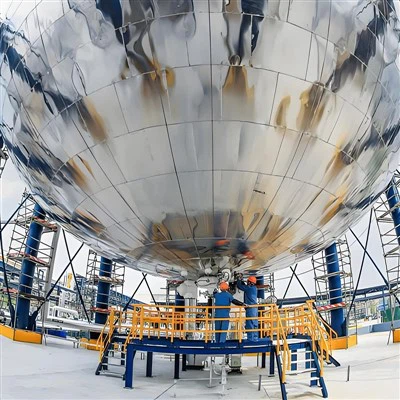
Alright, folks! As a supplier of CO2 recovery plants, I often get asked about the key factors to consider when selecting materials for these plants. It's a crucial topic because the right material selection can make or break the efficiency, durability, and overall performance of a CO2 recovery plant.
Let's start off by talking about why CO2 recovery plants are so important. With the increasing concern about global warming and greenhouse gas emissions, capturing and reusing CO2 has become a hot topic. CO2 recovery plants play a significant role in this process by helping industries reduce their carbon footprint. Whether it's a Co2 Processing Plant, Co2 Manufacturing Plant, or Co2 Recycling Plant, the proper selection of materials is essential.
Chemical Resistance
One of the most important criteria for material selection in a CO2 recovery plant is chemical resistance. CO2 can react with various substances, especially in the presence of moisture, forming carbonic acid. This acidic environment can be extremely corrosive to many materials. So, when choosing materials, we need to ensure that they can withstand the corrosive effects of CO2 and any other chemicals involved in the recovery process.
For example, stainless steel is a popular choice because it has good resistance to corrosion. But not all stainless steels are created equal. We usually look for high - grade stainless steels such as 316L, which contains molybdenum. The molybdenum enhances the steel's resistance to pitting and crevice corrosion, making it ideal for use in CO2 recovery systems where contact with corrosive substances is common.
Another option is non - metallic materials like certain types of plastics. Polytetrafluoroethylene (PTFE), for instance, is highly resistant to a wide range of chemicals, including acids and CO2. It can be used in gaskets, seals, and lining for pipes and tanks. The non - stick property of PTFE also helps prevent the build - up of contaminants, which is beneficial for the long - term operation of the plant.
Temperature and Pressure Resistance
CO2 recovery plants often operate under a wide range of temperature and pressure conditions. During the compression and purification processes, the temperature and pressure can increase significantly. Therefore, the materials used must be able to handle these extreme conditions without deforming or failing.
For high - pressure applications, materials with high strength are required. Carbon steel, for example, is known for its excellent strength and can handle high - pressure environments. However, as mentioned earlier, it has poor corrosion resistance compared to stainless steel. In cases where both high pressure and corrosion resistance are needed, alloy steels are a better option. These steels are specially formulated to combine high strength with good corrosion resistance.


When it comes to temperature resistance, materials need to be able to maintain their mechanical properties over a wide temperature range. Some polymers may become brittle at low temperatures or soften at high temperatures. Ceramics, on the other hand, can withstand very high temperatures and are often used in components that are exposed to extreme heat, such as certain types of heat exchangers.
Mechanical Properties
The mechanical properties of materials, such as strength, ductility, and hardness, are also crucial. Strength is important to ensure that the components of the CO2 recovery plant can withstand the forces exerted on them during operation. For example, pipes and vessels need to have sufficient strength to hold the pressurized CO2 without bursting.
Ductility is the ability of a material to deform under stress without breaking. This property is useful in situations where the components may be subject to vibrations or thermal expansion and contraction. A ductile material can absorb some of the energy from these forces and prevent the formation of cracks.
Hardness is relevant for components that are subject to wear and tear. For example, valves and pumps may have parts that are in constant contact with the CO2 stream and other abrasive substances. Using hard materials can help reduce wear and extend the service life of these components.
Cost - effectiveness
Let's face it, cost is always a factor in any industrial project. When selecting materials for a CO2 recovery plant, we need to find a balance between performance and cost. While high - end materials may offer superior performance, they may also come with a hefty price tag.
We can use a life - cycle cost analysis to determine the most cost - effective option. This analysis takes into account not only the initial cost of the material but also the cost of installation, maintenance, and replacement over the expected lifespan of the plant. For example, a more expensive material with better corrosion resistance may require less frequent replacement and maintenance, which can result in lower overall costs in the long run.
Compatibility with Other Materials
In a CO2 recovery plant, different materials are used in various components, and they need to be compatible with each other. For example, if a metal pipe is connected to a plastic fitting, there should be no chemical reactions or physical incompatibilities between them.
Galvanic corrosion can occur when two different metals are in contact in the presence of an electrolyte. To prevent this, we need to ensure that the metals used in close proximity have a similar electrochemical potential. We can also use insulating materials or coatings to separate dissimilar metals.
Ease of Fabrication and Installation
The materials selected for a CO2 recovery plant should be easy to fabricate and install. Complex fabrication processes can increase the cost and time required to build the plant. For example, some materials may be difficult to cut, weld, or shape, which can make the manufacturing process more challenging.
Materials that can be easily formed into the required shapes and sizes can simplify the fabrication process. Additionally, materials that are lightweight and easy to handle are more convenient for installation. This can reduce the labor requirements and the risk of accidents during the construction of the plant.
Environmental Impact
In today's world, environmental impact is an important consideration. We should choose materials that are environmentally friendly and sustainable. Some materials may have a high carbon footprint during their production process, while others may be difficult to recycle at the end of their life.
For example, recycled materials can be a good option as they reduce the demand for virgin resources and minimize waste. Additionally, materials that are biodegradable or have a low environmental impact during their use and disposal are preferable.
Availability
The availability of the materials is another practical consideration. If a material is rare or difficult to obtain, it can cause delays in the construction or maintenance of the CO2 recovery plant. We should choose materials that are readily available in the market to ensure a smooth supply chain.
So, there you have it - the main material selection criteria for a CO2 recovery plant. As a supplier, I understand the importance of getting these choices right. If you're in the market for a CO2 recovery plant and have any questions about material selection or the plant itself, don't hesitate to reach out. We're here to help you make the best decisions for your project.
References
- ASM Handbook Committee. ASM Handbook Volume 13A: Corrosion: Fundamentals, Testing, and Protection. ASM International, 2003.
- Callister, William D., and David G. Rethwisch. Materials Science and Engineering: An Introduction. Wiley, 2016.
- Green, Don W., and Robert H. Perry. Perry's Chemical Engineers' Handbook. McGraw - Hill, 2007.