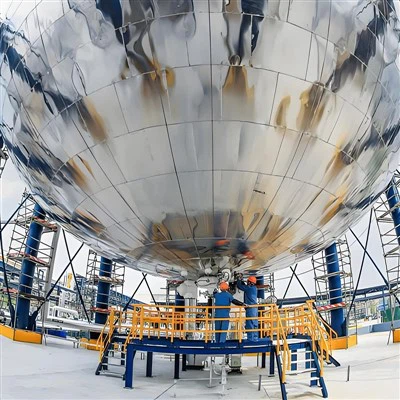
Hey there! As a supplier for a Carbon Removal Plant, I've been deeply involved in this field, and I'm super excited to share some optimization techniques for these plants.
First off, let's understand what a Carbon Removal Plant does. It's all about pulling carbon dioxide (CO2) out of the atmosphere or industrial emissions. This is crucial in the fight against climate change. There are various ways to do this, and optimizing the plant's operations can make a huge difference in its efficiency and effectiveness.
1. Advanced Separation Technologies
One of the key parts of a Carbon Removal Plant is the separation of CO2 from other gases. The Co2 Air Separation Unit plays a vital role here. Using advanced membrane separation techniques can significantly improve the efficiency of CO2 capture. These membranes are designed to selectively allow CO2 molecules to pass through while blocking other gases.
For example, some new membranes are made from materials that have high permeability and selectivity for CO2. This means they can separate CO2 quickly and with high purity. Another approach is using adsorption-based separation. Special adsorbents can be used to attract and hold CO2 molecules. These adsorbents can be regenerated, allowing them to be used over and over again. This not only reduces the cost but also makes the process more sustainable.


2. Energy Management
Carbon Removal Plants consume a lot of energy, mainly for the separation and capture processes. Optimizing energy use is essential to make these plants more economically viable and environmentally friendly. One way to do this is by using waste heat recovery systems. Many industrial processes produce a large amount of waste heat that can be harnessed to power the Carbon Removal Plant.
For instance, if the plant is located near a power plant or a factory, it can use the waste heat from their operations to heat the adsorbents during the regeneration process or to power other parts of the plant. Another option is to integrate renewable energy sources like solar or wind power. By using these clean energy sources, the plant can reduce its carbon footprint even further. This also helps to make the plant more resilient to fluctuations in the energy market.
3. Process Integration
Integrating different processes within the Carbon Removal Plant can lead to significant improvements in efficiency. For example, combining the CO2 capture process with other industrial processes can create synergies. Some industries, like cement production or steelmaking, produce large amounts of CO2 emissions. By integrating a Carbon Capture Plant directly into these processes, the CO2 can be captured at the source.
This not only reduces the overall emissions but also makes the capture process more efficient. The captured CO2 can then be used in other industries, such as the food and beverage industry or enhanced oil recovery. This creates a closed-loop system where the CO2 is recycled and reused, rather than being released into the atmosphere.
4. Monitoring and Control Systems
Having a good monitoring and control system is crucial for optimizing the performance of a Carbon Removal Plant. These systems can continuously monitor the various parameters of the plant, such as temperature, pressure, and CO2 concentration. By collecting and analyzing this data, operators can identify any issues or inefficiencies in real-time.
For example, if the CO2 capture efficiency starts to decline, the monitoring system can detect this and alert the operators. They can then take corrective actions, such as adjusting the operating conditions or replacing a faulty component. Advanced control systems can also optimize the plant's operation automatically. They can adjust the flow rates, temperatures, and pressures based on the real-time data to ensure the plant is running at its maximum efficiency.
5. Catalyst Development
Catalysts can play a significant role in accelerating the chemical reactions involved in CO2 capture and conversion. Developing new and more efficient catalysts can improve the performance of the Carbon Removal Plant. For example, some catalysts can lower the activation energy required for the CO2 capture reaction, making it happen more quickly and at lower temperatures.
This not only reduces the energy consumption but also increases the overall efficiency of the process. Researchers are constantly working on developing new catalysts that are more selective, stable, and cost-effective. These catalysts can be used in different parts of the plant, such as in the CO2 separation unit or in the conversion of CO2 into other useful products.
6. Maintenance and Upgrades
Regular maintenance and timely upgrades are essential for keeping a Carbon Removal Plant running smoothly. Over time, the equipment in the plant can wear out or become less efficient. Regular maintenance can help to prevent breakdowns and ensure the plant is operating at its best.
Upgrading the plant with the latest technologies and equipment can also improve its performance. For example, replacing an old CO2 separation unit with a newer and more efficient one can significantly increase the CO2 capture rate. It's important to have a long-term maintenance and upgrade plan in place to ensure the plant remains competitive and sustainable.
7. Collaboration and Research
Collaboration between different stakeholders, such as researchers, industry players, and government agencies, is crucial for the development and optimization of Carbon Removal Plants. By sharing knowledge and resources, we can accelerate the progress in this field.
For example, researchers can work with plant operators to test new technologies and optimization techniques. Industry players can provide real-world data and feedback to help improve the design and operation of the plants. Government agencies can support research and development through funding and policy incentives.
If you're interested in learning more about our Carbon Removal Plants or have any questions about the optimization techniques we've discussed, feel free to reach out. We're always happy to have a chat and explore how we can help you meet your carbon removal goals. Whether you're looking to build a new plant or optimize an existing one, we've got the expertise and solutions you need. So, don't hesitate to contact us and start the conversation about a more sustainable future.
References
- Smith, J. (2020). Advances in Carbon Capture Technologies. Journal of Environmental Science.
- Johnson, A. (2019). Energy Management in Industrial Plants. Industrial Engineering Review.
- Brown, K. (2021). Catalyst Development for CO2 Conversion. Chemical Engineering Journal.