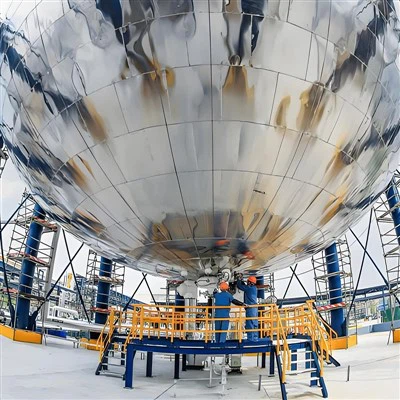
As a supplier of Liquid Co2 Plants, I understand the critical importance of quality control standards in ensuring the efficient and safe operation of these facilities. In this blog post, I will delve into the key quality control standards that govern the production and operation of Liquid Co2 Plants.
Raw Material Quality
The quality of the raw materials used in a Liquid Co2 Plant is the first and foremost factor in determining the quality of the final product. Carbon dioxide (CO2) is typically sourced from various industrial processes, such as fermentation, ammonia production, and flue gas from power plants. The purity of the CO2 feedstock is crucial, as impurities can affect the performance of the purification and liquefaction processes and the quality of the liquid CO2 product.
The CO2 feedstock should meet specific purity requirements, which may vary depending on the end - use of the liquid CO2. For example, in food and beverage applications, the CO2 must be of high purity to ensure compliance with food safety regulations. Typically, the CO2 feedstock should have a purity of at least 99% to be suitable for most industrial applications. Impurities such as sulfur compounds, nitrogen oxides, and hydrocarbons need to be carefully monitored and removed during the purification process.
Purification Process Standards
The purification process is a vital step in a Liquid Co2 Plant. It is designed to remove impurities from the CO2 feedstock to meet the required product purity. There are several purification methods commonly used in Liquid Co2 Plants, including adsorption, absorption, and membrane separation.
Adsorption
Adsorption is a widely used purification method that involves passing the CO2 feedstock through a bed of adsorbent material, such as activated carbon or molecular sieves. The adsorbent selectively captures impurities, allowing the purified CO2 to pass through. The quality control of the adsorption process includes monitoring the temperature, pressure, and flow rate of the feedstock, as well as the saturation level of the adsorbent. Regular replacement or regeneration of the adsorbent is necessary to maintain its effectiveness.
Absorption
Absorption uses a liquid solvent to remove impurities from the CO2 feedstock. The CO2 is bubbled through the solvent, and the impurities react with the solvent and are removed. The choice of solvent is critical, and it should have high selectivity for the impurities and be easily regenerated. Quality control in the absorption process involves monitoring the solvent concentration, temperature, and pH, as well as the efficiency of the regeneration process.
Membrane Separation
Membrane separation is a relatively new purification method that uses a semi - permeable membrane to separate the CO2 from impurities based on their different permeation rates. The quality control of membrane separation includes monitoring the membrane integrity, pressure difference across the membrane, and the flow rate of the feedstock. Any damage to the membrane can lead to a decrease in purification efficiency.
Liquefaction Process Standards
Once the CO2 is purified, it is liquefied. The liquefaction process typically involves compressing and cooling the CO2 to a temperature and pressure at which it changes from a gas to a liquid state.
Compression
The compression stage is crucial for achieving the high pressures required for liquefaction. The compressors used in Liquid Co2 Plants need to be carefully selected and maintained. Quality control in the compression process includes monitoring the compressor performance, such as the compression ratio, discharge pressure, and power consumption. Regular maintenance, including lubrication and inspection of compressor components, is essential to prevent breakdowns and ensure efficient operation.
Cooling
Cooling is another critical step in the liquefaction process. The CO2 is cooled to a temperature below its critical point to transform it into a liquid. The cooling system should be designed to provide efficient heat transfer and maintain a stable temperature. Quality control in the cooling process involves monitoring the temperature of the CO2 at different stages, the flow rate of the cooling medium, and the efficiency of the heat exchangers.
Product Quality Standards
The final product, liquid CO2, must meet specific quality standards depending on its intended use. Some of the key quality parameters include purity, moisture content, and the presence of trace contaminants.
Purity
As mentioned earlier, the purity of liquid CO2 is a critical quality parameter. For industrial applications, a purity of 99.9% or higher is often required. In food and beverage applications, the purity requirements are even more stringent, and the liquid CO2 must meet the relevant food safety standards.
Moisture Content
Moisture in liquid CO2 can cause problems such as equipment corrosion and blockages in pipelines. The moisture content of the liquid CO2 should be kept as low as possible, typically below a few parts per million (ppm). Moisture can be removed during the purification process, and its content is continuously monitored to ensure compliance with the standards.
Trace Contaminants
Trace contaminants, such as heavy metals and microbial contaminants, need to be carefully controlled. In food and beverage applications, the presence of these contaminants can pose a significant health risk. Regular testing is carried out to detect and quantify trace contaminants, and the production process is adjusted accordingly to ensure that the liquid CO2 meets the required safety standards.
Equipment and Safety Standards
In addition to the product - related quality control standards, the equipment and safety standards in a Liquid Co2 Plant are also of utmost importance.
Equipment Design and Installation
The equipment used in a Liquid Co2 Plant, including compressors, heat exchangers, and storage tanks, should be designed and installed in accordance with relevant industry standards. The equipment should be able to withstand the operating conditions, such as high pressures and low temperatures, and be resistant to corrosion. Regular inspections and maintenance of the equipment are necessary to ensure its safe and efficient operation.
Safety Systems
A Liquid Co2 Plant is a potentially hazardous facility due to the high - pressure and low - temperature conditions, as well as the flammable and toxic nature of some of the products and by - products. Therefore, comprehensive safety systems are required. These include pressure relief valves, emergency shutdown systems, and gas detection systems. The safety systems should be regularly tested and maintained to ensure their reliability in case of an emergency.
Environmental Standards
Liquid Co2 Plants also need to comply with environmental standards. The production process may generate waste products, such as spent adsorbents and wastewater, which need to be properly managed. The emission of greenhouse gases and other pollutants during the production process should be minimized.
Waste Management
Waste products generated during the purification and liquefaction processes need to be disposed of in an environmentally friendly manner. Spent adsorbents can often be regenerated or recycled, and wastewater should be treated to remove contaminants before being discharged.
Emission Control
The emission of CO2 itself is a concern, especially in the context of climate change. Although the CO2 produced in a Liquid Co2 Plant is typically captured and utilized, any fugitive emissions should be minimized. Other potential pollutants, such as nitrogen oxides and sulfur compounds, should also be controlled to meet environmental regulations.
Conclusion
In conclusion, the quality control standards for a Liquid Co2 Plant cover a wide range of aspects, from raw material quality to product quality, equipment safety, and environmental compliance. As a supplier of Liquid Co2 Production Plant, we are committed to ensuring that our plants meet the highest quality control standards. Our CO 2 Purification and Liquefaction Plants are designed and manufactured with the latest technologies and in strict accordance with industry best practices. If you are in the market for a Liquid Co2 Plant, we invite you to contact us for a detailed discussion on your specific requirements and how we can meet them.


References
- "Industrial Gases in Practice" by Carl M. Le Blanc
- "Handbook of Carbon Dioxide Utilization" edited by Gabriele Centi and Siglinda Perathoner