Hey there! If you're in the market for a liquid nitrogen plant, you're probably wondering what raw materials are needed to make it all work. Well, you've come to the right place. I'm a supplier of liquid nitrogen plants, and I'm here to break it down for you.
The Primary Raw Material: Air
The main raw material for a liquid nitrogen plant is, believe it or not, air. Air is composed of about 78% nitrogen, 21% oxygen, and small amounts of other gases like argon, carbon dioxide, and neon. The process of extracting nitrogen from air involves several steps, and it all starts with the intake of ambient air.
First, the air is filtered to remove dust, dirt, and other particulate matter. This is crucial because any impurities can damage the equipment in the plant. After filtration, the air is compressed to increase its pressure. Compression is an energy - intensive process, but it's necessary to prepare the air for further processing.
Once the air is compressed, it's cooled down to extremely low temperatures. This is where the magic of cryogenics comes in. The cooling process is achieved through a series of heat exchangers and expansion turbines. As the air cools, the different components start to condense at different temperatures.
Oxygen has a higher boiling point (-183°C) compared to nitrogen (-196°C). So, as the temperature drops, oxygen liquefies first, and it can be separated from the nitrogen. The liquid oxygen is removed, leaving behind a high - purity nitrogen gas. This nitrogen gas is then further cooled until it liquefies.
Other Materials and Additives
While air is the main raw material, there are other materials and additives that are essential for the proper functioning of a liquid nitrogen plant.
Adsorbents
Adsorbents play a crucial role in the purification process. They are used to remove trace amounts of water vapor, carbon dioxide, and other contaminants from the compressed air. Molecular sieves are commonly used adsorbents in liquid nitrogen plants. These materials have a porous structure that can selectively trap different molecules based on their size and shape. For example, they can trap water vapor and carbon dioxide, which could cause blockages in the cryogenic equipment if not removed.
Lubricants
Lubricants are necessary for the moving parts of the plant, such as the compressors and turbines. They reduce friction and wear, ensuring smooth operation and prolonging the lifespan of the equipment. Specialized lubricants are used in cryogenic applications because they need to maintain their properties at extremely low temperatures.
Insulation Materials
Insulation is vital to prevent heat from entering the cryogenic parts of the plant. The low - temperature components need to be kept cold to maintain the efficiency of the liquefaction process. Materials like perlite, fiberglass, and polyurethane foam are commonly used for insulation. These materials have low thermal conductivity, which means they can effectively reduce the heat transfer between the cold components and the surrounding environment.
Equipment and Infrastructure
In addition to the raw materials and additives, the construction and operation of a liquid nitrogen plant require a variety of equipment and infrastructure.


Compressors
Compressors are the workhorses of the plant. They take in ambient air and increase its pressure. There are different types of compressors, such as reciprocating compressors and centrifugal compressors. Reciprocating compressors are known for their high efficiency at low to medium flow rates, while centrifugal compressors are better suited for high - flow applications.
Heat Exchangers
Heat exchangers are used to transfer heat between different streams of fluids. In a liquid nitrogen plant, they are used to cool the compressed air and to recover heat from the expanding gases. There are several types of heat exchangers, including shell - and - tube heat exchangers and plate - fin heat exchangers.
Cryogenic Tanks
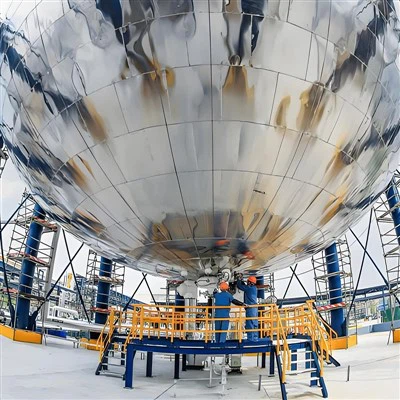
Cryogenic tanks are used to store the liquid nitrogen. These tanks need to be well - insulated to prevent the liquid nitrogen from boiling off. They are designed to withstand the low temperatures and high pressures associated with cryogenic storage. The tanks come in different sizes, depending on the production capacity of the plant and the storage requirements of the customer.
Our Liquid Nitrogen Plant Offerings
As a supplier of liquid nitrogen plants, we offer a range of products to meet different customer needs. Our Cryogenic Liquid Nitrogen Unit is a compact and efficient solution for small - to - medium - scale production. It's easy to install and operate, making it a great choice for businesses that need a reliable source of liquid nitrogen.
For larger production requirements, we have the Liquid Nitrogen Production Unit. This unit is designed for high - volume production and can be customized to meet specific customer specifications. It features advanced technology and high - quality components to ensure maximum efficiency and reliability.
If you're looking for a complete turn - key solution, our Liquid Nitrogen Production Plant is the way to go. We'll handle everything from the design and construction to the installation and commissioning. Our team of experts will work closely with you to understand your needs and provide you with a solution that meets your exact requirements.
Why Choose Us?
When it comes to choosing a liquid nitrogen plant supplier, there are several reasons why you should choose us.
First of all, we have years of experience in the industry. Our team of engineers and technicians has in - depth knowledge of cryogenic technology and liquid nitrogen production. We've designed and installed numerous liquid nitrogen plants around the world, and we've learned from each project to continuously improve our products and services.
Secondly, we use only the highest - quality materials and components in our plants. We source our equipment from reputable manufacturers, and we subject all our products to rigorous quality control tests before they leave our factory. This ensures that you get a reliable and long - lasting liquid nitrogen plant.
Finally, we offer excellent after - sales support. Our team is available 24/7 to provide technical assistance and maintenance services. We understand that downtime can be costly for your business, so we'll do everything we can to keep your plant running smoothly.
Contact Us for Your Liquid Nitrogen Plant Needs
If you're interested in purchasing a liquid nitrogen plant or have any questions about the raw materials and the production process, don't hesitate to contact us. We're here to help you find the right solution for your business. Whether you're a small laboratory or a large industrial facility, we have the expertise and the products to meet your needs.
References
- Perry, R. H., & Green, D. W. (1997). Perry's Chemical Engineers' Handbook. McGraw - Hill.
- Kohl, A. L., & Nielsen, R. B. (1997). Gas Purification. Gulf Publishing Company.
- Cengel, Y. A., & Boles, M. A. (2015). Thermodynamics: An Engineering Approach. McGraw - Hill Education.