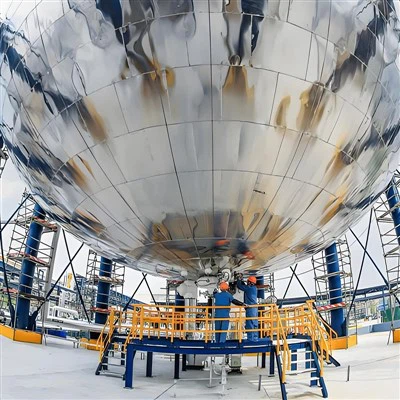
Safety is of paramount importance in any industrial setting, and a liquid nitrogen plant is no exception. As a leading supplier of Liquid Nitrogen Gas Plant, we understand the critical role that safety devices play in ensuring the smooth and secure operation of these facilities. In this blog post, we will explore the various safety devices commonly found in a liquid nitrogen plant and their significance in preventing accidents and protecting personnel and equipment.
Pressure Relief Valves
Pressure relief valves are essential safety devices in a liquid nitrogen plant. These valves are designed to automatically open and release excess pressure when it exceeds a pre - set limit. In a liquid nitrogen system, pressure can build up due to various factors such as thermal expansion of the liquid nitrogen, blockages in the piping, or malfunctions in the equipment.
For example, if a blockage occurs in a pipeline, the pressure upstream of the blockage will start to rise. Without a pressure relief valve, this increased pressure could lead to pipe bursts, which can be extremely dangerous. The pressure relief valve provides a safe path for the excess pressure to escape, protecting the integrity of the entire system. We supply high - quality pressure relief valves that are calibrated to the specific pressure requirements of our High Purity 99.6% Cryogenic Air Separation Plant, ensuring reliable operation.
Temperature Sensors
Temperature is a crucial parameter in a liquid nitrogen plant. Liquid nitrogen has a very low boiling point of approximately - 196°C (- 321°F). Monitoring the temperature at various points in the plant is essential to detect any abnormal heating or cooling that could indicate a problem.
Temperature sensors are installed in key areas such as storage tanks, heat exchangers, and transfer lines. If the temperature in a storage tank starts to rise above the normal range, it could be a sign of a heat leak or a malfunction in the insulation. This early detection allows operators to take corrective actions before the situation becomes critical. Our Liquid Oxygen Nitrogen Plants are equipped with state - of - the - art temperature sensors that provide accurate and real - time temperature readings.
Level Sensors
Level sensors are used to monitor the amount of liquid nitrogen in storage tanks. Maintaining the proper liquid level is crucial for the safe operation of the plant. If the level is too high, there is a risk of overflow, which can lead to cryogenic burns for personnel and damage to the surrounding equipment. On the other hand, if the level is too low, it could cause problems with the pumping system and potentially lead to the introduction of air into the system, which can be dangerous.
There are different types of level sensors available, such as float - type sensors, ultrasonic sensors, and capacitance sensors. Each type has its own advantages and is selected based on the specific requirements of the plant. Our liquid nitrogen plants are fitted with reliable level sensors that provide accurate level measurements, allowing operators to manage the inventory effectively and ensure safe operation.
Oxygen Detectors
One of the major hazards associated with liquid nitrogen is the potential for oxygen deficiency. Liquid nitrogen can displace oxygen in an enclosed space, creating an environment where the oxygen concentration is too low to support human life. Oxygen detectors are installed in areas where there is a risk of nitrogen leakage, such as around storage tanks, transfer areas, and maintenance areas.
These detectors continuously monitor the oxygen level in the air and sound an alarm if the oxygen concentration drops below a safe level. This early warning system allows personnel to evacuate the area immediately and take appropriate measures to restore the oxygen level. We ensure that all our liquid nitrogen plants are equipped with high - quality oxygen detectors to protect the safety of the operators.
Emergency Shut - off Valves
Emergency shut - off valves are critical safety devices that can be used to quickly stop the flow of liquid nitrogen in case of an emergency. These valves can be activated manually or automatically in response to various triggers, such as a fire, a major leak, or a power failure.
In the event of a fire, for example, the emergency shut - off valve can be closed to prevent the supply of liquid nitrogen to the affected area, reducing the risk of further damage. Our liquid nitrogen plants are designed with reliable emergency shut - off valves that are easy to operate and maintain, providing an additional layer of safety.
Flame Detectors
Although liquid nitrogen itself is non - flammable, there are other flammable substances and potential ignition sources in a liquid nitrogen plant. Flame detectors are installed to detect the presence of flames in the plant. These detectors can quickly identify a fire and trigger an alarm system, as well as activate the emergency response procedures.
Flame detectors use different technologies, such as infrared (IR), ultraviolet (UV), or a combination of both. They are highly sensitive and can detect flames from a distance, allowing for early detection and rapid response. This helps to minimize the damage caused by a fire and protect the personnel and equipment in the plant.
Leak Detection Systems
Leak detection systems are essential for identifying any leaks of liquid nitrogen in the plant. Even small leaks can be dangerous over time, as they can lead to oxygen deficiency and cryogenic burns. There are several types of leak detection systems available, including acoustic sensors, which can detect the sound of a leak, and vapor sensors, which can detect the presence of nitrogen vapor in the air.


These systems are installed throughout the plant, especially in areas where there are joints, valves, and connections. By detecting leaks early, operators can take immediate action to repair the leak and prevent any potential hazards. Our liquid nitrogen plants are equipped with advanced leak detection systems to ensure the safety and reliability of the operation.
Protective Barriers and Enclosures
Protective barriers and enclosures are used to separate personnel from the potentially dangerous areas of the liquid nitrogen plant. These barriers can be made of materials such as steel or reinforced glass and are designed to prevent accidental contact with liquid nitrogen or other hazardous equipment.
Enclosures are also used to contain any leaks or spills and prevent them from spreading to other areas of the plant. For example, storage tanks are often enclosed in a secondary containment structure to catch any leaked liquid nitrogen. This helps to protect the environment and the safety of the surrounding area.
Personal Protective Equipment (PPE)
In addition to the safety devices installed in the plant, personal protective equipment (PPE) is also an important part of the safety measures. Operators working in a liquid nitrogen plant are required to wear appropriate PPE, such as cryogenic gloves, safety goggles, and insulated suits.
Cryogenic gloves are designed to protect the hands from the extremely low temperatures of liquid nitrogen, while safety goggles prevent any splashes from getting into the eyes. Insulated suits provide overall protection for the body. We provide our customers with guidance on the proper selection and use of PPE to ensure the safety of their operators.
In conclusion, safety devices play a vital role in the operation of a liquid nitrogen plant. As a supplier of liquid nitrogen plants, we are committed to providing our customers with high - quality safety devices that meet the highest standards of safety and reliability. By investing in these safety devices, our customers can ensure the smooth and secure operation of their liquid nitrogen plants, protect their personnel and equipment, and comply with all relevant safety regulations.
If you are interested in purchasing a liquid nitrogen plant or have any questions about the safety devices in our plants, we encourage you to contact us for a detailed discussion. Our team of experts is ready to assist you in selecting the right equipment for your specific needs and to provide you with all the necessary support and guidance.
References
- Perry, R. H., & Green, D. W. (Eds.). (1997). Perry's Chemical Engineers' Handbook. McGraw - Hill.
- Crowl, D. A., & Louvar, J. F. (2002). Chemical Process Safety: Fundamentals with Applications. Prentice Hall.
- National Fire Protection Association. (2018). NFPA 55: Compressed Gases and Cryogenic Fluids Code.