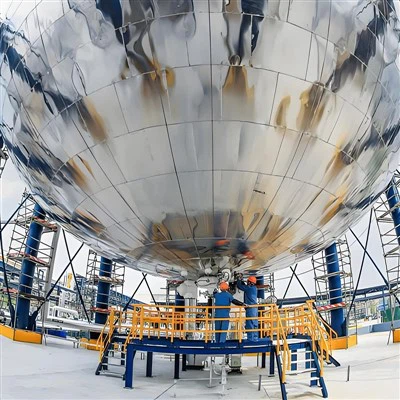
In today's rapidly evolving industrial landscape, the role of CO2 manufacturing plants has become increasingly significant. As a supplier of Co2 Manufacturing Plant, I have witnessed firsthand the various social impacts that these facilities bring about. This blog post aims to delve into the multifaceted social implications of CO2 manufacturing plants, exploring both the positive and negative aspects.
Positive Social Impacts
1. Economic Development
One of the most prominent positive social impacts of a CO2 manufacturing plant is its contribution to economic development. These plants create jobs at various skill levels, from entry - level positions in production and maintenance to high - tech jobs in research and development. For example, in the construction phase, a large number of temporary jobs are generated for workers such as engineers, architects, and construction laborers. Once the plant is operational, it provides long - term employment opportunities for technicians, operators, and managers.
Moreover, CO2 manufacturing plants stimulate the local economy by purchasing raw materials and services from local suppliers. This creates a multiplier effect, as the income generated by these suppliers is then spent in the local community, further boosting economic activity. In addition, the plant pays taxes to the local and national governments, which can be used to fund public services such as education, healthcare, and infrastructure development.
2. Environmental Benefits
Contrary to popular belief, well - managed CO2 manufacturing plants can have significant environmental benefits. Many modern plants are equipped with CO2 Recovery Unit technology, which captures CO2 emissions from industrial processes that would otherwise be released into the atmosphere. By recycling and reusing this CO2, these plants help to reduce greenhouse gas emissions and mitigate climate change.
For instance, the recovered CO2 can be used in a variety of industries, such as food and beverage, where it is used for carbonation, and in agriculture, where it can enhance plant growth in greenhouses. This not only reduces the demand for fossil - fuel - derived CO2 but also helps to close the carbon cycle, making the overall industrial process more sustainable.
3. Technological Advancement
CO2 manufacturing plants are at the forefront of technological innovation. The need to improve efficiency, reduce emissions, and produce high - quality CO2 products drives research and development in areas such as carbon capture, purification, and storage. This technological progress has spill - over effects on other industries, as the knowledge and expertise gained in CO2 manufacturing can be applied to other fields.
For example, advancements in carbon capture technology developed for CO2 manufacturing plants can be used in power generation to reduce the carbon footprint of fossil - fuel power plants. Additionally, the development of more efficient CO2 purification processes can lead to improvements in the production of other industrial gases.
4. Community Engagement
CO2 manufacturing plants often engage with the local community in various ways. They may sponsor local events, support community projects, and provide educational opportunities for local residents. For example, a plant might offer internships and apprenticeships to students, giving them hands - on experience in the industrial sector. This not only helps to develop the local talent pool but also fosters a positive relationship between the plant and the community.
In addition, plants may participate in environmental stewardship programs, such as tree - planting initiatives or beach clean - ups, which help to improve the quality of life in the local area and raise awareness about environmental issues.
Negative Social Impacts
1. Health and Safety Concerns
CO2 is a potentially hazardous gas. Although modern CO2 manufacturing plants are designed with strict safety protocols, there is always a risk of accidents, such as leaks or explosions. These incidents can pose a significant threat to the health and safety of plant workers and the surrounding community.
Exposure to high levels of CO2 can cause symptoms such as headaches, dizziness, shortness of breath, and in severe cases, loss of consciousness and death. In addition, the chemicals and by - products used in the CO2 manufacturing process may also be harmful to human health if not properly managed.
To address these concerns, plants must invest in safety training for their employees, implement strict safety regulations, and have emergency response plans in place. However, despite these measures, the risk of accidents can never be completely eliminated.
2. Noise and Air Pollution
CO2 manufacturing plants can generate significant noise and air pollution. The operation of machinery, such as compressors and pumps, can produce loud noises that can be a nuisance to nearby residents. In addition, the plant may emit pollutants such as particulate matter, sulfur dioxide, and nitrogen oxides, which can have negative impacts on air quality and human health.
To mitigate these issues, plants can install noise - reducing equipment and implement air pollution control measures, such as scrubbers and filters. However, these solutions can be expensive, and in some cases, may not completely eliminate the problem.
3. Social Disruption
The construction and operation of a CO2 manufacturing plant can cause social disruption in the local community. The influx of workers during the construction phase can put pressure on local housing, transportation, and other infrastructure. In addition, the presence of the plant may change the character of the community, leading to conflicts between the new workers and the existing residents.
Moreover, the plant's operations may require the acquisition of land, which can displace local residents and disrupt their way of life. This can lead to social unrest and resentment towards the plant and its operators.
Mitigating the Negative Impacts
To minimize the negative social impacts of CO2 manufacturing plants, it is essential to take a proactive approach. This includes conducting thorough environmental and social impact assessments before the plant is built, engaging with the local community throughout the project lifecycle, and implementing measures to reduce noise, air pollution, and health risks.
For example, plants can work with local authorities to develop land - use plans that minimize the impact on local residents. They can also invest in community development projects to offset the social disruption caused by the plant. In addition, continuous improvement in safety and environmental management practices is crucial to ensure the long - term sustainability of the plant and its positive relationship with the community.


Conclusion
In conclusion, CO2 manufacturing plants have both positive and negative social impacts. On the one hand, they contribute to economic development, environmental protection, technological advancement, and community engagement. On the other hand, they pose health and safety risks, generate noise and air pollution, and can cause social disruption.
As a supplier of Co2 Production Plant, I believe that it is our responsibility to ensure that these plants are designed, built, and operated in a way that maximizes the positive impacts and minimizes the negative ones. By working together with our customers, local communities, and regulatory authorities, we can create a more sustainable future for everyone.
If you are interested in learning more about our CO2 manufacturing plants or would like to discuss potential procurement opportunities, please feel free to reach out. We are committed to providing high - quality products and services that meet your specific needs.
References
- International Energy Agency. (2020). Global CO2 emissions in 2020.
- World Health Organization. (2018). Guidelines for indoor air quality: Carbon dioxide.
- United Nations Environment Programme. (2019). Emissions gap report 2019.