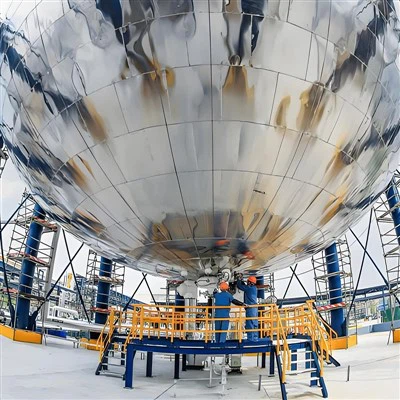
In the realm of industrial gas production, oxygen liquid plants play a pivotal role. As a seasoned supplier in this field, I've had the privilege of witnessing the evolution and disparities between domestic and foreign oxygen liquid plants. This blog aims to delve into a comprehensive comparison, shedding light on various aspects that are crucial for potential buyers.
Technological Advancements
One of the most significant differences between domestic and foreign oxygen liquid plants lies in technological advancements. Foreign plants, especially those from developed countries like Germany and Japan, often boast cutting - edge technologies. These countries have a long - standing history of research and development in industrial gas production. Their oxygen liquid plants are equipped with state - of - the - art control systems, which can precisely regulate the entire production process. For example, they use advanced sensors to monitor temperature, pressure, and purity levels in real - time. Any deviation from the set parameters can be immediately detected and corrected, ensuring high - quality liquid oxygen production.
On the other hand, domestic oxygen liquid plants have also made remarkable progress in recent years. With increased investment in research and development, many domestic manufacturers have developed their own advanced technologies. Some domestic plants are now using innovative membrane separation and cryogenic distillation techniques. These technologies not only improve the efficiency of oxygen production but also reduce energy consumption. However, in general, foreign plants still have an edge in terms of overall technological sophistication, especially in the development of high - end components and control algorithms.
Quality and Purity
The quality and purity of liquid oxygen produced by domestic and foreign plants are also areas of comparison. Foreign oxygen liquid plants are often associated with high - quality products. They adhere to strict international standards, such as ISO and ASME. These standards ensure that the liquid oxygen produced has a high level of purity, usually above 99.5%. The strict quality control measures in foreign plants involve multiple levels of filtration and purification processes. For instance, they use advanced molecular sieve adsorbers to remove impurities like carbon dioxide and water vapor.
Domestic oxygen liquid plants have also been working hard to improve product quality. Many domestic manufacturers have obtained relevant national and international certifications. They have established comprehensive quality management systems to ensure that the liquid oxygen meets the required purity standards. In some cases, domestic plants can produce liquid oxygen with a purity comparable to that of foreign plants. However, due to differences in raw material quality and production processes, there may still be some minor variations in product quality between domestic and foreign plants.
Cost - effectiveness
Cost - effectiveness is a crucial factor for buyers when choosing an oxygen liquid plant. Foreign oxygen liquid plants are often more expensive in terms of initial investment. The high cost is mainly due to the advanced technologies and high - quality components used in these plants. In addition, the transportation and installation costs of foreign plants can also be significant, especially when they are imported from overseas. However, foreign plants may offer better long - term cost - effectiveness in terms of energy efficiency and product quality. Their advanced technologies can reduce energy consumption, which can lead to significant savings in operating costs over time.
Domestic oxygen liquid plants, on the other hand, are generally more affordable in terms of initial investment. The lower cost is mainly due to the relatively lower labor and material costs in the domestic market. Domestic plants also offer more flexible pricing options, which can be attractive to small and medium - sized enterprises. Moreover, domestic manufacturers can provide timely after - sales service, which can further reduce the overall cost of ownership. However, domestic plants may have higher energy consumption in some cases, which can increase the long - term operating costs.
After - sales Service
After - sales service is another aspect where domestic and foreign oxygen liquid plants differ. Foreign plants often provide comprehensive after - sales service packages. They have a global network of service centers, which can provide timely technical support and maintenance services. These service centers are staffed with highly trained technicians who can quickly diagnose and solve problems. In addition, foreign manufacturers usually offer long - term warranties and spare parts supply.
Domestic oxygen liquid plants also offer after - sales service, but the scope and quality may vary. Many domestic manufacturers have established local service teams, which can provide on - site maintenance and repair services. However, due to the relatively limited international presence, it may be more difficult for domestic manufacturers to provide timely service to overseas customers. On the other hand, domestic manufacturers are more likely to understand the local market and customer needs, which can lead to more customized after - sales service solutions.
Environmental Impact
In today's world, environmental impact is an important consideration when choosing an oxygen liquid plant. Foreign plants are often designed with advanced environmental protection technologies. They use energy - efficient equipment and processes to reduce carbon emissions. For example, some foreign plants are equipped with waste heat recovery systems, which can convert waste heat into useful energy. In addition, they have strict emission control measures to ensure that the production process does not cause significant environmental pollution.
Domestic oxygen liquid plants have also been emphasizing environmental protection. Many domestic manufacturers are actively promoting the use of clean energy sources, such as solar and wind power, in their production processes. They are also developing new technologies to reduce waste gas emissions and noise pollution. However, compared with foreign plants, domestic plants may still face some challenges in terms of environmental protection, especially in the implementation of advanced environmental technologies.


Market Competitiveness
The market competitiveness of domestic and foreign oxygen liquid plants is affected by various factors. Foreign plants have a strong brand image and a long - standing reputation in the international market. They are often preferred by large - scale enterprises and high - end customers. Their advanced technologies and high - quality products give them a competitive advantage in the global market. For example, foreign plants are widely used in industries such as aerospace, electronics, and medical.
Domestic oxygen liquid plants have a strong foothold in the domestic market. They understand the local market needs and can provide more cost - effective solutions. Many domestic plants are also actively expanding their overseas markets. They are participating in international exhibitions and promoting their products through various channels. With the continuous improvement of product quality and technological level, domestic plants are gradually becoming more competitive in the international market.
As a supplier of Liquid Oxygen (LOX) Plant, Oxygen Liquid Plant, and Liquid Oxygen Production Plant, I understand that each customer has unique requirements. Whether you are looking for a high - tech foreign plant or a cost - effective domestic plant, I can provide you with professional advice and solutions. If you are interested in purchasing an oxygen liquid plant, please feel free to contact me for further discussion and negotiation. We can work together to find the most suitable plant for your specific needs.
References
- Smith, J. (2020). Industrial Gas Production Technologies. London: Elsevier.
- Chen, L. (2021). Advances in Oxygen Separation and Liquefaction. Beijing: Science Press.
- International Organization for Standardization (ISO). (2019). ISO Standards for Industrial Gas Production. Geneva: ISO.