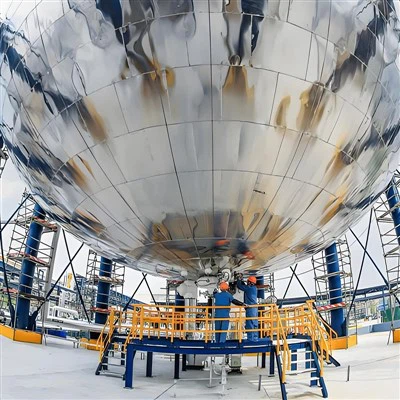
As a seasoned supplier of Cryogenic Gas Plants, I've witnessed firsthand the transformative power of cryogenic separation in the gas industry. Cryogenic separation is a cornerstone technology that enables the purification and isolation of various gases from a mixture, offering high purity and efficiency. In this blog, I'll delve into the principles of cryogenic separation in a gas plant, exploring its underlying science, processes, and applications.
The Science Behind Cryogenic Separation
At its core, cryogenic separation relies on the differences in boiling points of various gases. When a gas mixture is cooled to extremely low temperatures, typically below -150°C, the components with higher boiling points condense into liquids while those with lower boiling points remain in the gaseous state. This phase separation allows for the isolation and purification of individual gases.


The key to successful cryogenic separation lies in precise temperature control and the use of specialized equipment. Cryogenic plants are equipped with heat exchangers, distillation columns, and refrigeration systems that work together to achieve the desired temperature and separation efficiency. By carefully controlling the temperature and pressure within the system, it's possible to separate gases with high purity and yield.
The Cryogenic Separation Process
The cryogenic separation process typically involves several stages, each designed to remove specific impurities and isolate the desired gases. Here's a step-by-step overview of the process:
- Pre-treatment: Before entering the cryogenic plant, the gas mixture undergoes pre-treatment to remove impurities such as water, carbon dioxide, and hydrocarbons. This is typically done using adsorption, filtration, or chemical processes to prevent these impurities from freezing and clogging the equipment.
- Compression and Cooling: The pre-treated gas mixture is then compressed and cooled to a temperature below its dew point. This causes the components with higher boiling points to condense into liquids, while the remaining gases remain in the gaseous state.
- Distillation: The cooled gas mixture is then fed into a distillation column, where it is separated into its individual components based on their boiling points. The column consists of multiple trays or packing materials that provide a large surface area for mass transfer between the liquid and vapor phases. As the gas mixture rises through the column, the components with lower boiling points vaporize and rise to the top, while the components with higher boiling points condense and fall to the bottom.
- Refrigeration: To maintain the low temperatures required for cryogenic separation, the plant is equipped with a refrigeration system. This system typically uses a refrigerant such as nitrogen or helium to remove heat from the gas mixture and maintain the desired temperature.
- Product Recovery: Once the gases have been separated, they are recovered and purified further using additional processes such as adsorption, filtration, or membrane separation. The purified gases are then stored in tanks or transported to their final destination.
Applications of Cryogenic Separation
Cryogenic separation is used in a wide range of industries, including the chemical, petrochemical, pharmaceutical, and food and beverage industries. Some of the common applications of cryogenic separation include:
- Air Separation: Cryogenic air separation is used to produce high-purity oxygen, nitrogen, and argon from air. These gases are used in a variety of applications, including steelmaking, chemical production, and medical applications.
- Natural Gas Processing: Cryogenic separation is used to remove impurities such as water, carbon dioxide, and hydrocarbons from natural gas. This process, known as natural gas liquefaction, is used to produce liquefied natural gas (LNG), which is a cleaner and more efficient alternative to traditional fossil fuels.
- Hydrogen Production: Cryogenic separation is used to produce high-purity hydrogen from a variety of feedstocks, including natural gas, coal, and biomass. Hydrogen is used in a variety of applications, including fuel cells, chemical production, and transportation.
- Helium Recovery: Cryogenic separation is used to recover helium from natural gas and other sources. Helium is a valuable gas that is used in a variety of applications, including medical imaging, aerospace, and semiconductor manufacturing.
Advantages of Cryogenic Separation
Cryogenic separation offers several advantages over other separation technologies, including:
- High Purity: Cryogenic separation can produce gases with extremely high purity, typically greater than 99.9%. This makes it ideal for applications that require high-quality gases, such as semiconductor manufacturing and medical applications.
- High Yield: Cryogenic separation can achieve high yields of the desired gases, typically greater than 90%. This makes it a cost-effective option for large-scale gas production.
- Energy Efficiency: Cryogenic separation is a relatively energy-efficient process, especially when compared to other separation technologies such as adsorption and membrane separation. This is because the process relies on the natural differences in boiling points of the gases, rather than the use of external energy sources.
- Versatility: Cryogenic separation can be used to separate a wide range of gases, including oxygen, nitrogen, argon, hydrogen, and helium. This makes it a versatile option for a variety of industries and applications.
Our Cryogenic Gas Plant Solutions
As a leading supplier of Cryogenic Gas Plants, we offer a wide range of solutions to meet the needs of our customers. Our plants are designed to be highly efficient, reliable, and easy to operate, and they can be customized to meet the specific requirements of each application.
Some of our popular products include the Cryogenic Liquid Nitrogen Plant, Cryogenic Nitrogen Generation Plant, and Cryogenic Nitrogen Generator. These plants are designed to produce high-purity nitrogen and liquid nitrogen for a variety of applications, including food and beverage packaging, electronics manufacturing, and medical applications.
If you're interested in learning more about our Cryogenic Gas Plant solutions or if you have any questions about cryogenic separation, please don't hesitate to contact us. Our team of experts is available to answer your questions and provide you with the information you need to make an informed decision.
Conclusion
Cryogenic separation is a powerful technology that offers high purity, efficiency, and versatility in the gas industry. By understanding the principles of cryogenic separation and the process involved, it's possible to design and operate cryogenic plants that meet the specific needs of each application. As a leading supplier of Cryogenic Gas Plants, we're committed to providing our customers with the highest quality products and services, and we're always looking for new ways to improve our technology and processes. If you're interested in learning more about our solutions or if you have any questions about cryogenic separation, please contact us today to start a conversation about your specific requirements.
References
- Kohl, A. L., & Nielsen, R. B. (1997). Gas Purification. Gulf Publishing Company.
- Perry, R. H., & Green, D. W. (1997). Perry's Chemical Engineers' Handbook. McGraw-Hill.
- Schmidt, L. D. (2005). The Engineering of Chemical Reactions. Oxford University Press.