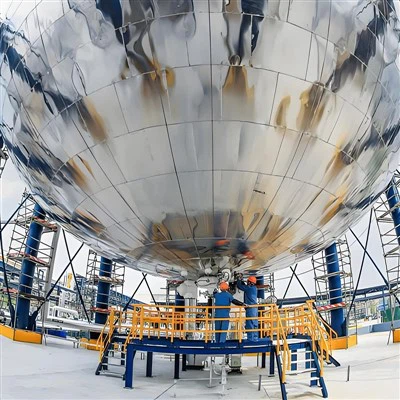
As a seasoned supplier of cryogenic oxygen plants, I've witnessed firsthand the growing demand for reliable and efficient oxygen production solutions across various industries. In this blog post, I'll delve into the working principle of a cryogenic oxygen plant, shedding light on the intricate processes that make it a cornerstone of modern oxygen generation.
The Basics of Cryogenic Oxygen Production
Cryogenic oxygen plants are designed to separate oxygen from air through a process known as cryogenic distillation. This method takes advantage of the different boiling points of the components in air, primarily nitrogen and oxygen, to produce high-purity oxygen. The process begins with the intake of ambient air, which is then filtered to remove dust, moisture, and other contaminants.
Air Compression and Pre - Cooling
The first step in the cryogenic oxygen production process is air compression. The filtered air is compressed to a high pressure, typically around 5 - 10 bar, using air compressors. This compression not only increases the density of the air but also raises its temperature. To prevent damage to downstream equipment and to facilitate the subsequent cooling process, the compressed air is then passed through a pre - cooler. The pre - cooler uses cooling water or a refrigerant to lower the temperature of the compressed air.
Purification of Compressed Air
After pre - cooling, the compressed air enters a purification system. This system is crucial for removing impurities such as carbon dioxide, water vapor, and hydrocarbons. These impurities can freeze at cryogenic temperatures and cause blockages in the equipment, leading to reduced efficiency and potential damage. The most common method of purification is adsorption, where the compressed air passes through beds of adsorbent materials such as molecular sieves. These materials selectively adsorb the impurities, leaving behind clean, dry air.


Cryogenic Cooling and Liquefaction
Once the air is purified, it is ready for cryogenic cooling. The purified air is passed through a series of heat exchangers, where it is cooled to extremely low temperatures, typically below - 170°C. This cooling process is achieved by exchanging heat with cold streams within the plant, such as the waste nitrogen stream. As the air is cooled, it eventually reaches its liquefaction point and turns into a liquid.
Cryogenic Distillation
The liquefied air then enters the distillation column, which is the heart of the cryogenic oxygen plant. The distillation column is a tall, vertical vessel that contains a series of trays or packing materials. The principle of distillation is based on the fact that different components of a mixture have different boiling points. In the case of air, nitrogen has a lower boiling point (- 196°C) than oxygen (- 183°C).
As the liquefied air rises through the distillation column, the nitrogen evaporates first due to its lower boiling point. The nitrogen vapor rises to the top of the column, while the oxygen - rich liquid collects at the bottom. The separation process is enhanced by the presence of the trays or packing materials, which provide a large surface area for mass transfer between the vapor and liquid phases.
Oxygen Collection and Product Output
At the bottom of the distillation column, the oxygen - rich liquid is collected. This liquid oxygen typically has a purity of around 99.5%. The liquid oxygen can be further processed depending on the end - use requirements. It can be stored in cryogenic storage tanks as a liquid or vaporized to produce gaseous oxygen.
If you are interested in a Cryogenic Liquid Oxygen Gas Plant, which is capable of producing both liquid and gaseous oxygen, or a Cryogenic Oxygen Generator for on - site oxygen production, or a Cryogenic Liquid Oxygen Plant for large - scale liquid oxygen production, we can offer you high - quality solutions.
Quality Control and Safety Measures
Throughout the entire process, strict quality control measures are in place to ensure the purity and safety of the produced oxygen. Continuous monitoring of parameters such as temperature, pressure, and oxygen purity is carried out using sensors and control systems. Safety is also a top priority in cryogenic oxygen plants. The equipment is designed with multiple safety features, such as pressure relief valves and emergency shutdown systems, to prevent accidents and protect the operators.
Advantages of Cryogenic Oxygen Plants
Cryogenic oxygen plants offer several advantages over other methods of oxygen production. Firstly, they can produce high - purity oxygen, typically up to 99.5% or higher. This high purity makes cryogenic oxygen suitable for applications where pure oxygen is required, such as in the medical and chemical industries. Secondly, cryogenic oxygen plants can produce large quantities of oxygen, making them ideal for industrial applications with high oxygen demand. Additionally, the process is relatively energy - efficient, especially when compared to other oxygen production methods such as pressure swing adsorption (PSA).
Applications of Cryogenic Oxygen
The oxygen produced by cryogenic oxygen plants has a wide range of applications. In the medical field, high - purity oxygen is used for respiratory support in hospitals and clinics. In the metal industry, oxygen is used in steelmaking and welding processes to increase the efficiency of combustion and improve the quality of the products. The chemical industry also relies on cryogenic oxygen for various chemical reactions, such as the production of ethylene oxide and methanol.
Conclusion
In conclusion, the working principle of a cryogenic oxygen plant involves a series of complex processes, from air compression and purification to cryogenic cooling, distillation, and product output. Each step is carefully designed and optimized to ensure the efficient and reliable production of high - purity oxygen. As a supplier of cryogenic oxygen plants, we understand the importance of these processes and are committed to providing our customers with the best - in - class equipment and solutions.
If you are in need of a cryogenic oxygen plant for your business, whether it's a Cryogenic Liquid Oxygen Gas Plant, a Cryogenic Oxygen Generator, or a Cryogenic Liquid Oxygen Plant, we invite you to contact us for a detailed discussion about your requirements. We can offer customized solutions based on your specific needs and help you make an informed decision.
References
- Perry, R. H., & Green, D. W. (Eds.). (1997). Perry's Chemical Engineers' Handbook. McGraw - Hill.
- Kohl, A. L., & Nielsen, R. B. (1997). Gas Purification. Gulf Publishing Company.
- Coulson, J. M., & Richardson, J. F. (1999). Chemical Engineering Volume 6: Chemical Engineering Design. Butterworth - Heinemann.