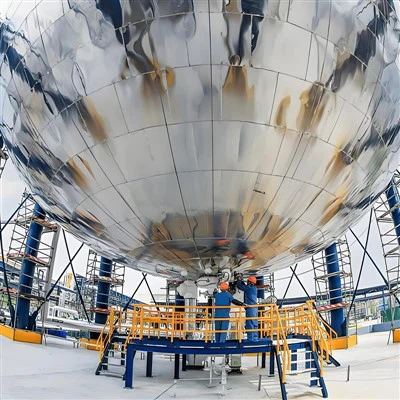
In the era of escalating environmental concerns, the role of carbon dioxide factories has become increasingly significant. As a dedicated supplier to carbon dioxide factories, I've witnessed firsthand the remarkable technologies that power these facilities. This blog post aims to delve into the various technologies used in a carbon dioxide factory, offering insights into their functions, benefits, and how they contribute to a more sustainable future.
Carbon Capture Technologies
One of the most crucial aspects of a carbon dioxide factory is the ability to capture carbon dioxide from various sources. There are several technologies employed for this purpose, each with its own advantages and applications.
Absorption Technology
Absorption technology is a widely used method for carbon capture. It involves the use of a liquid solvent to absorb carbon dioxide from a gas stream. The solvent, typically an amine-based solution, reacts with carbon dioxide to form a stable compound. This compound is then heated to release the carbon dioxide, which can be further processed and stored.
The advantage of absorption technology is its high efficiency and selectivity. It can capture a large amount of carbon dioxide from a gas stream, even at low concentrations. However, it also has some drawbacks, such as high energy consumption and the need for regular replacement of the solvent.
Adsorption Technology
Adsorption technology is another method for carbon capture. It uses a solid adsorbent material to attract and hold carbon dioxide molecules. The adsorbent material can be a porous material, such as activated carbon or zeolite, which has a large surface area for adsorption.


When the gas stream containing carbon dioxide passes through the adsorbent material, the carbon dioxide molecules are adsorbed onto the surface of the material. The adsorbed carbon dioxide can then be desorbed by heating or reducing the pressure, allowing for its recovery and storage.
Adsorption technology has several advantages, including low energy consumption, high selectivity, and the ability to operate at low temperatures. It is also a more environmentally friendly option compared to absorption technology, as it does not require the use of liquid solvents.
Membrane Technology
Membrane technology is a relatively new method for carbon capture. It uses a semi-permeable membrane to separate carbon dioxide from other gases in a gas stream. The membrane allows carbon dioxide molecules to pass through while blocking other gases.
The advantage of membrane technology is its simplicity and low energy consumption. It can be easily integrated into existing industrial processes and does not require large-scale equipment. However, it also has some limitations, such as low selectivity and the need for high-pressure operation.
Carbon Removal Technologies
Once carbon dioxide is captured, it needs to be removed from the gas stream and stored or utilized. There are several technologies available for carbon removal, each with its own characteristics and applications.
Carbon Removal Plant
A carbon removal plant is a facility designed to remove carbon dioxide from a gas stream and store it in a safe and permanent manner. There are several types of carbon removal plants, including geological storage, ocean storage, and mineralization.
Geological storage involves injecting carbon dioxide into underground geological formations, such as depleted oil and gas reservoirs or deep saline aquifers. The carbon dioxide is then trapped in these formations, preventing it from being released into the atmosphere.
Ocean storage involves injecting carbon dioxide into the deep ocean, where it can dissolve and be stored for a long time. However, this method has some environmental concerns, such as the potential impact on marine ecosystems.
Mineralization involves reacting carbon dioxide with certain minerals to form stable carbonate compounds. This method has the advantage of being a permanent and environmentally friendly way to store carbon dioxide.
Co2 Air Separation Unit
A Co2 air separation unit is a device used to separate carbon dioxide from air. It typically uses a combination of adsorption and membrane technologies to achieve high purity carbon dioxide separation.
The air separation unit first filters the air to remove impurities and then passes it through an adsorption bed to remove moisture and other contaminants. The purified air is then passed through a membrane module, where carbon dioxide is separated from other gases based on their different permeation rates.
The advantage of a Co2 air separation unit is its ability to produce high purity carbon dioxide from air, which can be used in various applications, such as food and beverage processing, chemical production, and enhanced oil recovery.
Carbon Utilization Technologies
In addition to carbon capture and removal, carbon dioxide can also be utilized as a valuable resource. There are several technologies available for carbon utilization, each with its own potential and challenges.
Chemical Conversion
Chemical conversion involves using carbon dioxide as a feedstock to produce various chemicals and materials. For example, carbon dioxide can be reacted with hydrogen to produce methanol, which is a widely used fuel and chemical intermediate.
Another example is the use of carbon dioxide in the production of polymers, such as polycarbonates and polyurethanes. By using carbon dioxide as a raw material, these polymers can have a lower carbon footprint compared to traditional polymers.
Biological Conversion
Biological conversion involves using microorganisms or plants to convert carbon dioxide into useful products. For example, microalgae can be grown in the presence of carbon dioxide and sunlight to produce biofuels, such as biodiesel and bioethanol.
Plants can also absorb carbon dioxide through photosynthesis and convert it into biomass, which can be used for energy production or as a feedstock for the production of other products.
Enhanced Oil Recovery
Enhanced oil recovery (EOR) is a technique used to increase the amount of oil that can be extracted from an oil reservoir. It involves injecting carbon dioxide into the reservoir, which helps to reduce the viscosity of the oil and improve its flowability.
By using carbon dioxide for EOR, not only can more oil be recovered, but also the carbon dioxide can be stored underground, reducing its emissions into the atmosphere.
The Role of Monitoring and Control Technologies
In a carbon dioxide factory, monitoring and control technologies play a crucial role in ensuring the efficient and safe operation of the facility. These technologies are used to monitor various parameters, such as temperature, pressure, flow rate, and carbon dioxide concentration, and to control the operation of the equipment and processes.
Sensors and Instrumentation
Sensors and instrumentation are used to measure and monitor various parameters in the carbon dioxide factory. For example, gas sensors can be used to measure the concentration of carbon dioxide in the gas stream, while temperature and pressure sensors can be used to monitor the operating conditions of the equipment.
These sensors provide real-time data, which can be used to optimize the operation of the facility and ensure its safety. They can also be integrated with control systems to automatically adjust the operation of the equipment based on the measured parameters.
Control Systems
Control systems are used to regulate the operation of the equipment and processes in the carbon dioxide factory. They can be programmed to perform various tasks, such as starting and stopping the equipment, adjusting the flow rate of the gas stream, and maintaining the desired temperature and pressure.
Advanced control systems, such as programmable logic controllers (PLCs) and distributed control systems (DCSs), are commonly used in carbon dioxide factories to provide precise and reliable control. These systems can be integrated with sensors and instrumentation to form a closed-loop control system, which can automatically adjust the operation of the facility based on the measured parameters.
Conclusion
In conclusion, a carbon dioxide factory relies on a variety of technologies to capture, remove, utilize, and monitor carbon dioxide. These technologies play a crucial role in reducing carbon dioxide emissions, mitigating climate change, and creating a more sustainable future.
As a supplier to carbon dioxide factories, I am committed to providing high-quality products and services that incorporate the latest technologies. Whether you are looking for carbon capture equipment, carbon removal plants, or carbon utilization technologies, I can offer you the solutions you need.
If you are interested in learning more about the technologies used in a carbon dioxide factory or would like to discuss your specific requirements, please feel free to contact me. I look forward to the opportunity to work with you and contribute to a greener and more sustainable world.
References
- Metz, B., Davidson, O. R., Bosch, P. R., Dave, R., & Meyer, L. A. (Eds.). (2005). IPCC Special Report on Carbon Dioxide Capture and Storage. Cambridge University Press.
- Lackner, K. S. (2003). A guide to CO2 sequestration. Science, 300(5626), 1677-1678.
- Olajire, A. A. (2010). Carbon dioxide capture and separation technologies for end-of-pipe applications - A review. Energy, 35(8), 3261-3276.