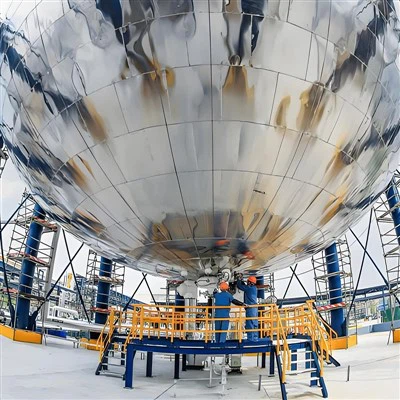
As a long - standing supplier to carbon dioxide factories, I've witnessed firsthand the industry's continuous evolution and the increasing emphasis on product quality. In this blog, I'll share some strategies and insights on how a carbon dioxide factory can improve its product quality.
1. Raw Material Sourcing
The quality of carbon dioxide products is highly dependent on the raw materials used. Carbon dioxide can be sourced from various places, such as industrial waste gases, natural carbon dioxide reservoirs, or through chemical reactions. When sourcing raw materials, factories should aim for high - purity sources.
For example, if using industrial waste gases, advanced pre - treatment processes are necessary to remove impurities like sulfur compounds, nitrogen oxides, and particulate matter. These impurities can not only affect the purity of the final carbon dioxide product but also cause corrosion in storage and transportation equipment. Factories should establish strict supplier evaluation systems to ensure that the raw materials meet the required quality standards. Regularly test the incoming raw materials to detect any potential quality issues early.
2. Advanced Production Technology
Investing in advanced production technology is crucial for improving product quality. Modern Co2 Air Separation Unit can separate carbon dioxide from other gases with high precision. These units use techniques such as cryogenic distillation, adsorption, and membrane separation.
Cryogenic distillation, for instance, can achieve high - purity carbon dioxide separation by cooling the gas mixture to extremely low temperatures and taking advantage of the different boiling points of various gases. Adsorption processes use adsorbents to selectively capture carbon dioxide from the gas stream. Membrane separation relies on the different permeation rates of gases through a membrane. By choosing the appropriate separation technology based on the raw material characteristics and production requirements, factories can significantly improve the purity of their carbon dioxide products.


Another important aspect is Carbon Capture Plant. These plants are designed to capture carbon dioxide from large - scale industrial emissions, such as those from power plants or cement factories. The captured carbon dioxide can then be further processed and purified. Advanced carbon capture technologies, like chemical absorption and physical adsorption, can capture carbon dioxide more efficiently and with higher selectivity, reducing the amount of impurities in the captured gas.
3. Quality Control during Production
Establishing a comprehensive quality control system is essential throughout the production process. This includes monitoring key process parameters such as temperature, pressure, flow rate, and composition at different production stages. Real - time monitoring can help detect any deviations from the normal operating conditions and allow for timely adjustments.
For example, in a Co2 Generation Plant, the temperature and pressure during the chemical reaction or separation process can significantly affect the quality of the produced carbon dioxide. By using sensors and control systems, factories can ensure that these parameters are maintained within the optimal range.
Regular sampling and analysis of the intermediate and final products are also necessary. Analytical techniques such as gas chromatography can accurately determine the composition and purity of carbon dioxide. By comparing the analysis results with the quality standards, factories can identify any quality issues and take corrective actions, such as adjusting the production process or purifying the product further.
4. Storage and Transportation
Proper storage and transportation are often overlooked aspects of product quality. Carbon dioxide should be stored in suitable containers that are resistant to corrosion and leakage. The storage facilities should be maintained at appropriate temperatures and pressures to prevent any changes in the product quality.
During transportation, it's important to use specialized equipment that can ensure the integrity of the carbon dioxide. For example, tanker trucks used for transporting liquid carbon dioxide should be well - insulated and equipped with safety devices to prevent leakage and over - pressure situations. Additionally, the transportation routes should be carefully planned to minimize the time and distance of transportation, reducing the risk of product quality degradation.
5. Staff Training and Certification
The skills and knowledge of the factory staff play a vital role in product quality improvement. Workers should receive regular training on production technology, quality control procedures, and safety regulations. Training programs can cover topics such as operating the production equipment correctly, conducting quality tests, and responding to emergency situations.
Certification programs can also be implemented to ensure that the staff has the necessary qualifications and expertise. For example, workers involved in the operation of high - precision separation equipment should be certified to operate such equipment. By having a well - trained and certified workforce, factories can ensure that the production processes are carried out accurately and efficiently, leading to higher - quality products.
6. Research and Development
Continuous research and development (R&D) are key to staying ahead in the carbon dioxide industry. Factories should invest in R&D to explore new production technologies, improve existing processes, and develop new applications for carbon dioxide.
For example, R&D efforts can focus on finding more efficient and environmentally friendly ways to capture and purify carbon dioxide. New adsorbents or membranes with higher selectivity and capacity can be developed, reducing the energy consumption and cost of the production process. Additionally, exploring new applications for carbon dioxide, such as in the food and beverage industry or as a feedstock for chemical synthesis, can open up new markets and increase the value of the product.
7. Environmental and Regulatory Compliance
Complying with environmental and regulatory requirements is not only a legal obligation but also an important factor in product quality. Regulations regarding the purity and emission standards of carbon dioxide products are becoming more stringent. Factories need to ensure that their production processes and products meet these standards.
By implementing environmentally friendly production processes, factories can not only reduce their environmental impact but also improve the quality of their products. For example, using renewable energy sources in the production process can reduce the carbon footprint and also eliminate potential impurities introduced by fossil - fuel - based energy sources.
Conclusion
Improving the product quality of a carbon dioxide factory is a multi - faceted process that involves raw material sourcing, advanced production technology, quality control, storage and transportation, staff training, R&D, and regulatory compliance. By implementing these strategies, factories can produce high - quality carbon dioxide products that meet the diverse needs of different industries.
If you're interested in high - quality carbon dioxide products or looking to improve the quality of your existing carbon dioxide production, I encourage you to reach out for a procurement discussion. We can work together to find the best solutions for your specific requirements.
References
- Smith, J. (2018). Carbon Dioxide Separation Technologies. Journal of Chemical Engineering, 25(3), 123 - 135.
- Johnson, A. (2019). Quality Control in Carbon Dioxide Production. Industrial Quality Management, 18(4), 78 - 89.
- Brown, C. (2020). Advances in Carbon Capture and Utilization. Environmental Science Reviews, 30(2), 156 - 170.