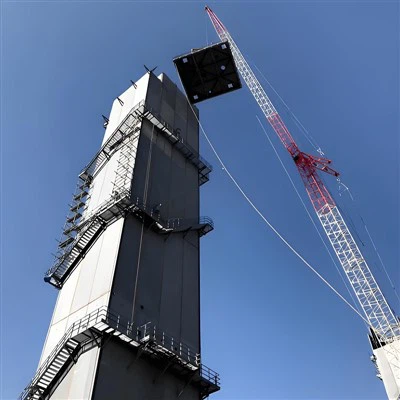
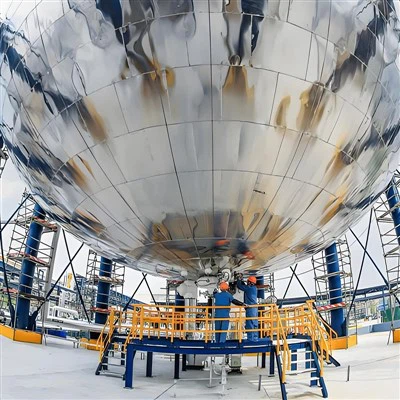
Can a liquid oxygen plant be customized? You bet it can! As a supplier of liquid oxygen plants, I've seen firsthand how crucial customization is in meeting the diverse needs of our clients. In this blog, I'll dive into the ins and outs of customizing liquid oxygen plants, sharing my experiences and insights along the way.


First off, let's talk about why customization matters. Every business has unique requirements when it comes to producing liquid oxygen. Some might need a small-scale plant for a local medical facility, while others could be looking for a large industrial plant to support heavy manufacturing operations. That's where customization steps in. By tailoring a liquid oxygen plant to specific needs, we can ensure optimal performance, efficiency, and cost-effectiveness.
One of the key aspects of customization is capacity. The amount of liquid oxygen a plant can produce per day is a critical factor. For instance, a small hospital might only need a plant with a low production capacity, say a few tons per day. On the other hand, a large chemical factory could require a high-capacity Liquid Oxygen Manufacturing Plant capable of producing dozens or even hundreds of tons daily. We work closely with our clients to understand their demand projections and design a plant with the right capacity.
Another important consideration is the purity of the liquid oxygen. Different applications have different purity requirements. Medical-grade liquid oxygen, for example, needs to meet strict purity standards to ensure patient safety. Industrial applications, while also requiring high purity, might have slightly different specifications. We can customize the purification processes in our plants to achieve the desired purity levels. This might involve adjusting the distillation columns, adding additional filtration steps, or using advanced separation technologies.
The location of the plant also plays a significant role in customization. If a plant is located in a remote area with limited access to utilities, we need to design it to be self-sufficient or at least able to operate with minimal external support. This could mean incorporating renewable energy sources like solar or wind power, or designing a water recycling system to reduce water consumption. On the other hand, a plant in an urban area might have different constraints, such as noise and environmental regulations. We take all these factors into account to create a plant that is compliant and efficient in its specific location.
Now, let's talk about the technology used in the plant. There are various technologies available for producing liquid oxygen, and the choice depends on the client's needs and budget. One of the most common technologies is cryogenic air separation, which involves cooling air to extremely low temperatures to separate oxygen from other components. This technology is highly efficient and can produce high-purity liquid oxygen. However, it also requires a significant investment in equipment and infrastructure. For clients with a smaller budget or less demanding purity requirements, we might recommend a non-cryogenic technology, such as pressure swing adsorption (PSA). PSA is a more cost-effective option for smaller-scale production.
We also offer customization in terms of automation and control systems. In today's digital age, many clients prefer plants that can be remotely monitored and controlled. This allows for real-time adjustments, predictive maintenance, and improved overall efficiency. We can integrate advanced automation systems into our plants, providing clients with the ability to manage their operations from anywhere in the world. This not only saves time and resources but also enhances safety and reliability.
When it comes to the physical design of the plant, we understand that every client has different space and layout requirements. We work with architects and engineers to design a plant that fits seamlessly into the available space. This might involve designing a compact plant for a small site or a modular plant that can be easily expanded in the future. We also pay attention to the ergonomics and safety of the plant, ensuring that it is easy to operate and maintain.
One of our success stories involves a client who needed a LOX Plant 85 TPD for their large-scale steel manufacturing operation. They had specific requirements regarding the plant's capacity, purity, and energy efficiency. Our team of experts worked closely with them to understand their needs and designed a customized plant using the latest cryogenic air separation technology. The plant was not only able to meet their production targets but also exceeded their expectations in terms of energy efficiency, resulting in significant cost savings for the client.
Another example is a medical facility that needed a small, reliable Liquid Oxygen Air Separation Plant to supply oxygen to their patients. We designed a compact plant with advanced purification technology to ensure medical-grade purity. The plant was also equipped with an automated monitoring system to ensure continuous operation and safety. The client was very satisfied with the plant's performance and the level of support we provided.
In conclusion, customizing a liquid oxygen plant is not only possible but also highly beneficial. It allows us to meet the unique needs of our clients, whether they are in the medical, industrial, or other sectors. By considering factors such as capacity, purity, location, technology, automation, and physical design, we can create a plant that is tailored to their specific requirements. If you're in the market for a liquid oxygen plant, I encourage you to reach out to us. We'd be happy to discuss your needs and provide you with a customized solution. Let's work together to build the perfect liquid oxygen plant for your business.
References
- Various industry reports on liquid oxygen production technologies
- Case studies of custom liquid oxygen plant installations