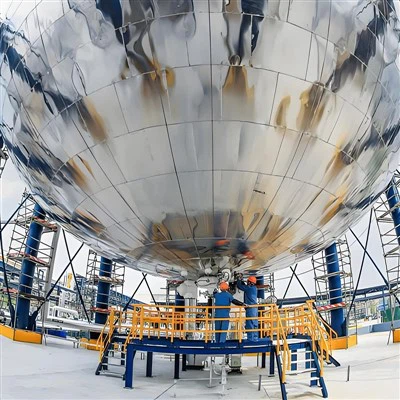
In the contemporary industrial landscape, environmental sustainability and energy efficiency have emerged as critical concerns for businesses across various sectors. For CO2 gas plants, reducing energy consumption is not only an environmental imperative but also a strategic business decision that can lead to significant cost savings and competitive advantages. As a leading supplier of Co2 Production Plant, CO2 Gas Recovery Plant, and CO2 Recovery Unit, I understand the unique challenges and opportunities that CO2 gas plants face in optimizing their energy usage. In this blog post, I will share some practical strategies and solutions that can help CO2 gas plants reduce their energy consumption and enhance their overall operational efficiency.
Understanding the Energy Consumption in CO2 Gas Plants
Before delving into the strategies for reducing energy consumption, it is essential to understand the primary sources of energy usage in CO2 gas plants. The energy consumption in these plants can be broadly categorized into three main areas:
- Compression and Liquefaction: CO2 gas needs to be compressed and liquefied for storage and transportation. This process requires a significant amount of energy, as the gas needs to be pressurized to high levels and cooled to low temperatures.
- Separation and Purification: CO2 gas is often mixed with other gases and impurities, which need to be separated and removed to obtain a high-purity product. This process typically involves the use of various separation techniques, such as absorption, adsorption, and distillation, which consume a considerable amount of energy.
- Power Generation and Auxiliary Systems: CO2 gas plants also require power for various auxiliary systems, such as pumps, fans, and lighting. These systems contribute to the overall energy consumption of the plant.
Strategies for Reducing Energy Consumption
Based on the above understanding, here are some practical strategies that CO2 gas plants can implement to reduce their energy consumption:


1. Optimize Compression and Liquefaction Processes
- Select Energy-Efficient Compressors: The choice of compressors plays a crucial role in the energy efficiency of the compression process. High-efficiency compressors with advanced control systems can significantly reduce the energy consumption by optimizing the compression ratio and minimizing the energy losses.
- Implement Waste Heat Recovery: The compression and liquefaction processes generate a large amount of waste heat, which can be recovered and reused for other purposes, such as preheating the feed gas or generating steam for power generation. This can help to reduce the overall energy consumption of the plant.
- Optimize Cooling Systems: The cooling systems used in the liquefaction process can also be optimized to reduce energy consumption. For example, the use of efficient heat exchangers and refrigeration systems can help to minimize the energy required for cooling.
2. Improve Separation and Purification Processes
- Use Advanced Separation Technologies: The development of advanced separation technologies, such as membrane separation and molecular sieve adsorption, can offer significant energy savings compared to traditional separation methods. These technologies are more selective and efficient, requiring less energy for the separation process.
- Optimize Operating Conditions: The operating conditions of the separation and purification processes, such as temperature, pressure, and flow rate, can have a significant impact on the energy consumption. By optimizing these conditions, the energy efficiency of the processes can be improved.
- Implement Process Integration: Process integration involves the integration of different processes in the plant to maximize the utilization of energy and resources. For example, the waste heat generated in one process can be used to preheat the feed gas in another process, reducing the overall energy consumption.
3. Enhance Power Generation and Auxiliary Systems
- Install Energy-Efficient Equipment: The use of energy-efficient pumps, fans, and motors can significantly reduce the energy consumption of the auxiliary systems. These equipment are designed to operate at high efficiency, consuming less energy while providing the same level of performance.
- Implement Energy Management Systems: Energy management systems can help to monitor and control the energy consumption of the plant in real-time. By analyzing the energy usage data, the plant operators can identify areas of high energy consumption and implement measures to reduce it.
- Optimize Lighting and HVAC Systems: The lighting and HVAC systems in the plant can also contribute to the overall energy consumption. By using energy-efficient lighting fixtures and optimizing the HVAC settings, the energy consumption of these systems can be reduced.
4. Implement Energy Management and Monitoring Systems
- Establish Energy Performance Indicators: Energy performance indicators (EPIs) can be used to measure and monitor the energy efficiency of the plant. By setting targets for these indicators and regularly monitoring the performance, the plant operators can identify areas for improvement and take appropriate actions.
- Conduct Energy Audits: Regular energy audits can help to identify the energy-saving opportunities in the plant. These audits involve a comprehensive assessment of the energy consumption of the plant, including the equipment, processes, and systems. Based on the audit results, the plant operators can develop and implement energy-saving measures.
- Train and Educate Employees: The employees in the plant play a crucial role in the energy management of the plant. By providing training and education on energy efficiency best practices, the employees can be empowered to take proactive measures to reduce the energy consumption of the plant.
Case Studies
To illustrate the effectiveness of the above strategies, here are some real-world case studies of CO2 gas plants that have successfully reduced their energy consumption:
- Case Study 1: XYZ CO2 Gas Plant: XYZ CO2 Gas Plant implemented a comprehensive energy management program, which included the optimization of the compression and liquefaction processes, the improvement of the separation and purification processes, and the enhancement of the power generation and auxiliary systems. As a result, the plant was able to reduce its energy consumption by 20% within a year, resulting in significant cost savings.
- Case Study 2: ABC CO2 Gas Plant: ABC CO2 Gas Plant installed a waste heat recovery system to recover the waste heat generated in the compression and liquefaction processes. The recovered heat was used to preheat the feed gas, reducing the energy consumption of the plant by 15%.
Conclusion
Reducing energy consumption is a critical challenge for CO2 gas plants, but it also presents significant opportunities for cost savings and environmental sustainability. By implementing the strategies outlined in this blog post, CO2 gas plants can optimize their energy usage, improve their operational efficiency, and reduce their environmental impact. As a supplier of Co2 Production Plant, CO2 Gas Recovery Plant, and CO2 Recovery Unit, I am committed to helping our customers achieve their energy efficiency goals. If you are interested in learning more about our energy-efficient solutions or would like to discuss your specific requirements, please feel free to contact us for a consultation.
References
- DOE. (2023). Energy Efficiency and Renewable Energy. Retrieved from https://www.energy.gov/eere/
- IEA. (2023). World Energy Outlook. Retrieved from https://www.iea.org/reports/world-energy-outlook
- EPA. (2023). Greenhouse Gas Emissions. Retrieved from https://www.epa.gov/ghgemissions