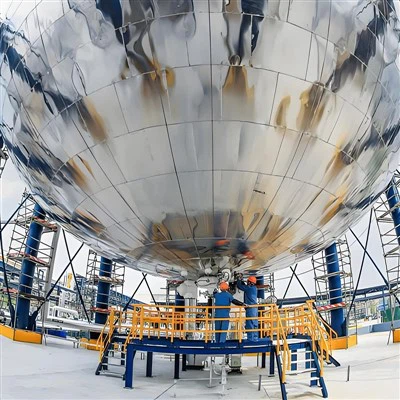
Fouling in a CO2 recovery plant can significantly reduce the efficiency of the plant, increase operational costs, and even lead to equipment failure. As a leading supplier of Co2 Factory, Co2 Processing Plant, and CO2 Gas Recovery Plant, we understand the importance of preventing fouling to ensure the smooth operation of the plant. In this blog post, we will discuss some effective strategies to prevent fouling in a CO2 recovery plant.
Understanding Fouling in CO2 Recovery Plants
Fouling in a CO2 recovery plant refers to the accumulation of unwanted materials on the surfaces of equipment such as heat exchangers, condensers, and absorbers. These materials can include dust, dirt, scale, corrosion products, and biological growth. Fouling can occur due to various reasons, including the quality of the feed gas, the operating conditions of the plant, and the design of the equipment.
The consequences of fouling can be severe. It can reduce the heat transfer efficiency of heat exchangers, leading to increased energy consumption and decreased plant capacity. Fouling can also cause blockages in pipes and valves, leading to reduced flow rates and increased pressure drops. In addition, fouling can accelerate corrosion and wear of equipment, reducing its lifespan and increasing maintenance costs.
Strategies for Preventing Fouling
Pretreatment of Feed Gas
One of the most effective ways to prevent fouling in a CO2 recovery plant is to pretreat the feed gas. The feed gas often contains impurities such as dust, sulfur compounds, and water vapor, which can contribute to fouling. By removing these impurities before the gas enters the recovery plant, the risk of fouling can be significantly reduced.
- Filtration: Installing high - efficiency filters at the inlet of the plant can remove dust and other solid particles from the feed gas. These filters can be designed to capture particles of different sizes, depending on the requirements of the plant.
- Desulfurization: Sulfur compounds in the feed gas can react with CO2 and other components in the plant, forming deposits that can cause fouling. Desulfurization processes such as amine - based desulfurization can be used to remove sulfur compounds from the feed gas.
- Dehumidification: Water vapor in the feed gas can condense and cause corrosion and fouling. Dehumidification systems, such as refrigeration dryers or adsorption dryers, can be used to remove water vapor from the feed gas.
Optimizing Operating Conditions
The operating conditions of the CO2 recovery plant can also have a significant impact on fouling. By optimizing these conditions, the risk of fouling can be minimized.
- Temperature and Pressure Control: Maintaining stable temperature and pressure conditions in the plant can prevent the formation of deposits. For example, in heat exchangers, operating at the optimal temperature and pressure can ensure that the heat transfer process is efficient and that fouling - prone substances do not precipitate.
- Flow Rate Control: Controlling the flow rate of the feed gas and the process fluids can help prevent fouling. A proper flow rate can ensure that the fluids have sufficient turbulence to prevent the deposition of particles on the equipment surfaces. However, excessive flow rates can also cause erosion and damage to the equipment, so it is important to find the optimal flow rate.
Chemical Treatment
Chemical treatment can be used to prevent fouling in a CO2 recovery plant. Chemicals can be added to the process fluids to inhibit the formation of deposits, disperse existing deposits, or prevent corrosion.
- Antiscalants: Antiscalants are chemicals that can prevent the formation of scale deposits. They work by interfering with the crystallization process of scale - forming salts, such as calcium carbonate and calcium sulfate.
- Dispersants: Dispersants can be used to disperse existing deposits and prevent them from agglomerating. They can keep the particles in suspension, allowing them to be carried away by the process fluids.
- Corrosion Inhibitors: Adding corrosion inhibitors to the process fluids can prevent the corrosion of equipment, which can contribute to fouling. Corrosion inhibitors work by forming a protective film on the equipment surfaces, preventing the contact of the metal with corrosive substances.
Equipment Design and Maintenance
The design of the equipment in a CO2 recovery plant can also play a role in preventing fouling. In addition, regular maintenance is essential to keep the equipment clean and functioning properly.
- Design for Easy Cleaning: Equipment should be designed with easy - to - clean features. For example, heat exchangers can be designed with removable tube bundles, which can be easily cleaned when fouling occurs.
- Regular Inspections and Cleaning: Regular inspections of the equipment can help detect fouling at an early stage. When fouling is detected, appropriate cleaning methods can be used, such as mechanical cleaning (e.g., brushing, scraping) or chemical cleaning (e.g., using cleaning agents).
Use of Advanced Materials
Using advanced materials in the construction of equipment can also help prevent fouling. Some materials have anti - fouling properties, which can reduce the adhesion of deposits on their surfaces.
- Coatings: Applying anti - fouling coatings on the surfaces of equipment can prevent the deposition of fouling substances. These coatings can be made of materials such as polymers or ceramics, which have low surface energy and are resistant to fouling.
- Non - Metallic Materials: Non - metallic materials such as plastics and composites can be used in some parts of the equipment. These materials are often more resistant to corrosion and fouling compared to metals.
Monitoring and Control
Monitoring the performance of the CO2 recovery plant is crucial for preventing fouling. By continuously monitoring key parameters such as heat transfer coefficients, pressure drops, and flow rates, early signs of fouling can be detected.


- Instrumentation: Installing appropriate instrumentation in the plant can provide real - time data on the operating conditions of the equipment. For example, temperature sensors, pressure sensors, and flow meters can be used to monitor the performance of heat exchangers and other equipment.
- Data Analysis: Analyzing the monitored data can help identify trends and patterns that may indicate fouling. By using data analytics techniques, operators can predict when fouling is likely to occur and take preventive measures in advance.
Conclusion
Preventing fouling in a CO2 recovery plant is essential for ensuring its efficient and reliable operation. By implementing the strategies discussed above, including pretreatment of feed gas, optimizing operating conditions, chemical treatment, proper equipment design and maintenance, use of advanced materials, and monitoring and control, the risk of fouling can be significantly reduced.
As a supplier of CO2 recovery plants, we are committed to providing our customers with high - quality equipment and comprehensive solutions for fouling prevention. Our plants are designed with the latest technologies and best practices to minimize the risk of fouling and ensure long - term, trouble - free operation.
If you are interested in our CO2 recovery plants or need more information on fouling prevention, we invite you to contact us for a detailed discussion. We look forward to working with you to meet your CO2 recovery needs.
References
- Smith, J. (2018). "Fouling in Industrial Heat Exchangers: Causes, Consequences, and Prevention." Journal of Chemical Engineering, 45(2), 123 - 135.
- Johnson, R. (2019). "Optimizing Operating Conditions for Fouling Prevention in CO2 Recovery Plants." Proceedings of the International Conference on CO2 Capture and Utilization, 345 - 352.
- Brown, A. (2020). "Advanced Materials for Fouling Prevention in Chemical Process Equipment." Materials Science and Engineering, 67(3), 234 - 246.