Hey there! As a supplier of cryogenic equipment, I've been getting a lot of questions lately about the cryogenic equipment requirements for cryogenic welding. So, I thought I'd take a few minutes to break it down for you.
First off, let's talk about what cryogenic welding is. Cryogenic welding is a specialized welding process that involves using extremely low temperatures to join materials. This process is often used in industries where high-strength, high-quality welds are required, such as aerospace, automotive, and energy.
Now, let's get into the cryogenic equipment requirements for cryogenic welding. There are several key pieces of equipment that are essential for this process, and I'll go over each one in detail.
Cryogenic Tanks
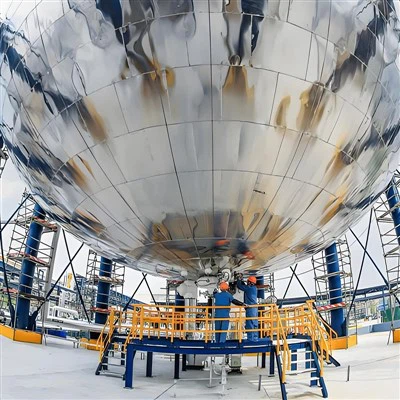
One of the most important pieces of equipment for cryogenic welding is the cryogenic tank. These tanks are used to store and transport the cryogenic liquids, such as liquid nitrogen or liquid helium, that are used in the welding process. Cryogenic tanks come in a variety of sizes and capacities, depending on the specific needs of your application.
When choosing a cryogenic tank, it's important to consider factors such as the volume of cryogenic liquid you'll need to store, the temperature range you'll be working with, and the safety features of the tank. Look for tanks that are made from high-quality materials and are designed to withstand the extreme temperatures and pressures associated with cryogenic liquids.
Cryogenic Pumps
In addition to cryogenic tanks, you'll also need a cryogenic pump to transfer the cryogenic liquid from the tank to the welding area. Cryogenic pumps are designed to handle the low temperatures and high pressures of cryogenic liquids, and they come in a variety of types and sizes.
There are two main types of cryogenic pumps: positive displacement pumps and centrifugal pumps. Positive displacement pumps are typically used for applications where a high flow rate is required, while centrifugal pumps are better suited for applications where a high pressure is needed.
When choosing a cryogenic pump, it's important to consider factors such as the flow rate and pressure requirements of your application, the type of cryogenic liquid you'll be using, and the compatibility of the pump with your cryogenic tank.
Cryogenic Valves
Another important piece of equipment for cryogenic welding is the cryogenic valve. Cryogenic valves are used to control the flow of cryogenic liquid through the system, and they come in a variety of types and sizes.
There are several different types of cryogenic valves, including ball valves, gate valves, globe valves, and check valves. Each type of valve has its own unique features and benefits, and the type of valve you choose will depend on the specific needs of your application.
When choosing a cryogenic valve, it's important to consider factors such as the flow rate and pressure requirements of your application, the type of cryogenic liquid you'll be using, and the compatibility of the valve with your cryogenic tank and pump.
Cryogenic Insulation
To prevent heat transfer and maintain the low temperatures required for cryogenic welding, you'll also need to use cryogenic insulation. Cryogenic insulation is used to wrap around the cryogenic tanks, pipes, and valves to reduce heat transfer and prevent the cryogenic liquid from boiling off.
There are several different types of cryogenic insulation materials available, including foam, fiberglass, and vacuum insulation panels. Each type of insulation material has its own unique features and benefits, and the type of insulation you choose will depend on the specific needs of your application.
When choosing cryogenic insulation, it's important to consider factors such as the temperature range you'll be working with, the thickness and density of the insulation, and the ease of installation and maintenance.
Cryogenic Welding Torches
Finally, you'll need a cryogenic welding torch to perform the actual welding. Cryogenic welding torches are designed to work with cryogenic liquids and are capable of producing high-quality welds at extremely low temperatures.
There are several different types of cryogenic welding torches available, including gas tungsten arc welding (GTAW) torches, gas metal arc welding (GMAW) torches, and plasma arc welding (PAW) torches. Each type of torch has its own unique features and benefits, and the type of torch you choose will depend on the specific needs of your application.
When choosing a cryogenic welding torch, it's important to consider factors such as the type of material you'll be welding, the thickness of the material, and the welding process you'll be using.


Conclusion
So, there you have it! Those are the main cryogenic equipment requirements for cryogenic welding. As a supplier of cryogenic equipment, I can help you choose the right equipment for your specific needs and ensure that you have everything you need to perform high-quality cryogenic welds.
If you're interested in learning more about cryogenic equipment or if you have any questions about cryogenic welding, please don't hesitate to [reach out]. We offer a wide range of cryogenic equipment, including Cryogenic Air Separation Plant, Cryogenic Air Separation Unit, and Gas Cryogenic Air Separation Plant. Our team of experts is here to help you find the best solutions for your application.
References
- ASME Boiler and Pressure Vessel Code, Section VIII, Division 1
- API 620 Design and Construction of Large, Welded, Low-Pressure Storage Tanks
- ISO 14690 Petroleum and natural gas industries – Guidelines for environmental protection in oil and gas production