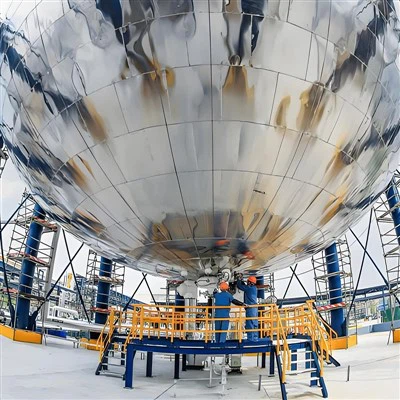
Hey there! As a supplier of oxygen plants, I've had the privilege of diving deep into the world of these amazing machines. Oxygen plants are crucial in various industries, from healthcare to manufacturing, and there are several different types out there. In this blog, I'm gonna break down the main types of oxygen plants, their features, and where they're commonly used.
Cryogenic Oxygen Plants
Let's start with cryogenic oxygen plants. These are the heavy - hitters in the oxygen production game. Cryogenic plants work on the principle of fractional distillation of air. Air is first compressed and then cooled to extremely low temperatures until it turns into a liquid. Different components of air, like oxygen, nitrogen, and argon, have different boiling points. By carefully controlling the temperature and pressure, these components can be separated.
One of the biggest advantages of cryogenic oxygen plants is their high purity output. They can produce oxygen with a purity of up to 99.5%. This makes them ideal for industries that require high - quality oxygen, such as the steel industry. In steelmaking, oxygen is used to increase the combustion efficiency in furnaces, which helps in producing high - quality steel.
Another great thing about cryogenic plants is their large production capacity. They can produce oxygen in large volumes, making them suitable for large - scale industrial operations. However, they do have some drawbacks. They're quite expensive to set up and require a lot of energy to operate. But if you need a continuous supply of high - purity oxygen in large quantities, a cryogenic oxygen plant is the way to go.
Pressure Swing Adsorption (PSA) Oxygen Plants
Next up are Pressure Swing Adsorption (PSA) oxygen plants. These plants use a different method to produce oxygen. They work by adsorbing nitrogen from the air using a special adsorbent material, usually zeolite. The air is first compressed and then passed through a vessel filled with the adsorbent. The nitrogen gets stuck to the adsorbent, while the oxygen passes through and is collected.
PSA oxygen plants are much more compact and less expensive to set up compared to cryogenic plants. They're also more energy - efficient, which means lower operating costs. The purity of oxygen produced by PSA plants is typically around 90 - 95%. This level of purity is sufficient for many applications, such as in hospitals for patient respiration.
PSA plants are also very flexible. They can be easily adjusted to change the production rate according to the demand. This makes them a popular choice for small to medium - scale operations. For example, a small - scale metal fabrication shop might use a PSA oxygen plant to support their welding and cutting processes.
Vacuum Pressure Swing Adsorption (VPSA) Oxygen Plants
Vacuum Pressure Swing Adsorption (VPSA) oxygen plants are an upgraded version of PSA plants. They operate on a similar principle but with a few key differences. In a VPSA plant, in addition to using pressure to adsorb nitrogen, a vacuum is also applied during the desorption process. This helps to remove the nitrogen more efficiently from the adsorbent.
VPSA plants can produce oxygen at a higher capacity than PSA plants while still maintaining a good level of purity, usually around 90 - 93%. They're a great option for industries that need a relatively large amount of oxygen but don't require the ultra - high purity that cryogenic plants offer. For instance, the wastewater treatment industry uses oxygen to support the growth of aerobic bacteria, which helps in breaking down organic matter. A VPSA oxygen plant can provide a cost - effective solution for this type of application.

Membrane Oxygen Plants
Membrane oxygen plants are a bit different from the others. They use a semi - permeable membrane to separate oxygen from air. Air is passed through the membrane, and because oxygen molecules are smaller than nitrogen molecules, they can pass through the membrane more easily.
These plants are very simple and compact. They have a low initial cost and are easy to operate and maintain. However, the purity of oxygen produced by membrane plants is relatively low, usually around 30 - 40%. This type of oxygen is often used in applications where a lower purity is acceptable, such as in aquaculture. In fish farms, oxygen is added to the water to increase the dissolved oxygen levels, and the lower - purity oxygen from a membrane plant can do the job just fine.
LNG Process Plant
If you're involved in the liquefied natural gas (LNG) industry, you might be interested in our LNG Process Plant. Oxygen plays an important role in the LNG process. It can be used in combustion processes to provide heat for various operations in the plant. Our LNG Process Plant is designed to meet the specific oxygen requirements of the LNG industry, ensuring efficient and reliable operation.
Where to Use Different Types of Oxygen Plants
- Healthcare: Hospitals and clinics mainly use PSA oxygen plants. The purity level of 90 - 95% is perfect for patient respiration. These plants can be installed on - site, providing a reliable and continuous supply of oxygen. In some cases, larger hospitals with a high demand for oxygen might also consider a VPSA plant.
- Manufacturing: The manufacturing industry has diverse oxygen requirements. Cryogenic plants are used in the steel and chemical industries, where high - purity oxygen is needed. PSA and VPSA plants are suitable for metal fabrication, glass manufacturing, and other industries that need a moderate amount of oxygen.
- Environmental: In wastewater treatment and aquaculture, VPSA and membrane oxygen plants are commonly used. The lower - purity oxygen can still effectively support the biological processes in these applications.
Contact Us for Your Oxygen Plant Needs
If you're in the market for an oxygen plant, whether it's a cryogenic plant for large - scale industrial use, a PSA plant for a small business, or something else, we're here to help. We have a wide range of oxygen plants to suit different needs and budgets. Our team of experts can provide you with detailed information, help you choose the right type of plant for your application, and assist with installation and maintenance.
Don't hesitate to reach out to us to start a conversation about your oxygen plant requirements. We're eager to work with you to find the best solution for your business.
References
- Perry, R. H., & Green, D. W. (1997). Perry's Chemical Engineers' Handbook. McGraw - Hill.
- Kohl, A. L., & Nielsen, R. B. (1997). Gas Purification. Gulf Publishing Company.