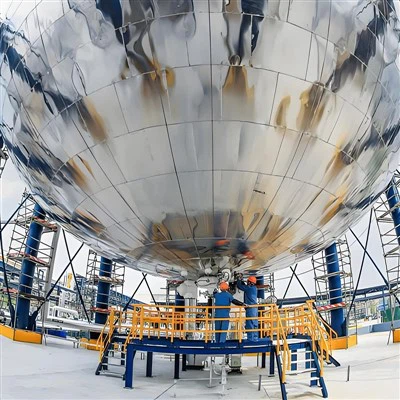
Hey there! I'm a supplier from a CO2 gas plant, and today I wanna chat about the quality standards for CO2 produced in our plant.
Let's start with the basics. CO2, or carbon dioxide, is a gas that's used in a whole bunch of industries. You'll find it in food and beverage, where it's used to carbonate drinks like soda and beer. It's also used in the medical field for things like laparoscopic surgeries and in fire extinguishers. Because it's used in so many important areas, having high - quality CO2 is super crucial.
Purity
One of the most important quality standards for CO2 is purity. The purity of CO2 is usually measured as a percentage. In most industrial applications, we're looking at a purity level of at least 99%. For food - grade CO2, the purity requirements are even stricter. It needs to be at least 99.9%. That means there can only be a tiny amount of other gases or impurities mixed in with the CO2.
Impurities can come from a variety of sources. During the production process, if the raw materials aren't clean or if there are issues with the equipment, impurities can sneak in. For example, sulfur compounds can be present in the feedstock gas. These sulfur compounds can not only affect the taste and smell of products when CO2 is used in the food and beverage industry but can also be harmful in medical applications. So, we've got to make sure our purification processes are top - notch to meet these high - purity standards.
Moisture Content
Moisture is another key factor. Excess moisture in CO2 can cause all sorts of problems. In industrial processes, it can lead to corrosion of equipment. If the CO2 is being used in a pipeline system, the moisture can react with the metal in the pipes, causing them to rust and eventually break down.
For food - grade CO2, moisture can promote the growth of bacteria and mold. This is a huge no - no when it comes to food safety. So, the moisture content in CO2 should be kept as low as possible. Typically, the moisture content in high - quality CO2 is measured in parts per million (ppm). We aim for a moisture content of less than 50 ppm in our CO2 gas plant.
Acidity and Alkalinity
The acidity or alkalinity of CO2 is also important. This is usually measured by the pH value. In general, CO2 should be close to neutral. An acidic or alkaline CO2 can have negative effects on the products it's used in.
In the food and beverage industry, an acidic CO2 can change the taste of the product. For example, if you're making a carbonated beverage and the CO2 is too acidic, the drink might taste overly sour. On the other hand, in some industrial processes, an alkaline CO2 can react with certain chemicals in an unexpected way, leading to process inefficiencies or even product failures.
Particle Content
Particles are yet another aspect of CO2 quality. Particles can be solid or liquid and can come from the production equipment, the raw materials, or the environment. These particles can clog filters and valves in industrial equipment, reducing the efficiency of the system.
In medical applications, particles in CO2 can be extremely dangerous. They can cause blockages in medical devices or be inhaled by patients, leading to health problems. So, we have strict filtration systems in place to remove particles. We aim for a particle size of less than 0.5 micrometers and a very low particle count per cubic meter of CO2.
How We Ensure Quality
At our CO2 gas plant, we've got a whole bunch of processes in place to make sure we meet these quality standards. First of all, we carefully select our raw materials. We work with reliable suppliers who can provide us with clean and pure feedstock gases.
We also have advanced purification systems. These systems use a combination of physical and chemical processes to remove impurities, moisture, and particles. For example, we use activated carbon filters to remove organic impurities and molecular sieve beds to remove moisture.
Regular testing is a must. We have a team of quality control experts who test the CO2 at various stages of the production process. We use state - of - the - art analytical equipment to measure purity, moisture content, acidity, and particle content. If any of the quality parameters are off, we take immediate action to correct the issue.
Applications and Quality Requirements
The quality requirements for CO2 can vary depending on its application. As I mentioned earlier, food - grade CO2 has very strict requirements. It needs to be free from any contaminants that could affect human health or the taste and smell of food and beverages.
In the medical field, CO2 used for insufflation during laparoscopic surgeries must be of the highest quality. It needs to be free from bacteria, viruses, and other harmful substances. The purity and particle content are closely monitored to ensure patient safety.


In industrial applications, such as in the oil and gas industry where CO2 is used for enhanced oil recovery, the purity requirements might be a bit more relaxed. However, it still needs to be free from substances that could cause corrosion or damage to the equipment.
Our CO2 Plants
We offer a range of Co2 Recycling Plant, CO2 Recovery And Production Plants, and Co2 Production Plant. These plants are designed to produce high - quality CO2 efficiently and cost - effectively. Our recycling plants are great for reducing waste and making the most of available resources. The recovery and production plants are equipped with the latest technology to ensure that we can meet the diverse quality requirements of our customers.
Conclusion
In conclusion, the quality standards for CO2 produced in a CO2 gas plant are complex and crucial. Purity, moisture content, acidity, and particle content all play important roles in determining the quality of CO2. At our plant, we're committed to meeting and exceeding these standards.
If you're in the market for high - quality CO2 or looking to invest in a CO2 plant, we'd love to have a chat with you. Whether you're in the food and beverage industry, the medical field, or any other industry that uses CO2, we can provide you with the products and solutions you need. So, don't hesitate to reach out to us for more information and to start a procurement discussion.
References
- Handbook of Industrial Gases
- Journal of Food Science and Technology - Special Issue on Food - Grade Gases
- Medical Gas Standards and Guidelines