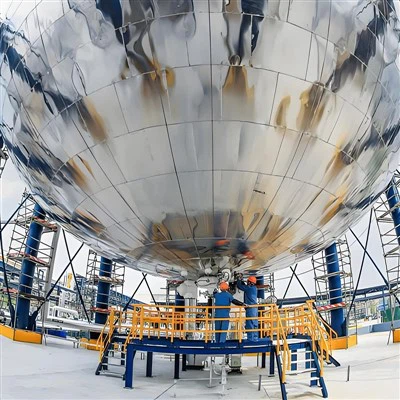
Hey there! As a supplier for a Carbon Removal Plant, I've been in the thick of this industry for quite a while. And let me tell you, understanding the performance indicators for a Carbon Removal Plant is super crucial. It's not just about making the plant run; it's about making it run efficiently and effectively. So, let's dive right into what these key performance indicators are.
1. Carbon Capture Efficiency
First off, carbon capture efficiency is like the MVP of performance indicators. It tells you how well the plant is actually capturing carbon dioxide from the air or industrial emissions. You calculate it by dividing the amount of carbon dioxide captured by the total amount of carbon dioxide that's available to be captured.
Let's say you've got a plant that's set up near a Co2 Generation Plant. This generation plant is churning out a whole bunch of CO2. Your carbon removal plant needs to grab as much of that CO2 as it can. A high - efficiency rate means that the plant is doing its job well, getting a large percentage of the available CO2.
For example, if the generation plant emits 100 tons of CO2 per day, and your carbon removal plant captures 80 tons, then your carbon capture efficiency is 80%. That's a pretty good number, but in an ideal world, we'd aim even higher. Improving this efficiency often involves optimizing the capture technology, like using better solvents in a chemical absorption system or more advanced filters in a physical separation process.
2. Energy Consumption
Now, energy consumption is another biggie. Running a carbon removal plant takes a lot of energy. Whether it's powering the fans to suck in air, heating or cooling the chemical processes, or running the pumps for fluid circulation, energy is constantly being used.
A good carbon removal plant should be designed to keep energy consumption as low as possible. High energy use not only costs more money but also kind of defeats the purpose if the energy is coming from fossil - fuel sources. You don't want to be emitting more CO2 to remove CO2.
One way to measure this is to calculate the energy required per ton of carbon dioxide captured. For instance, if your plant uses 1000 kilowatt - hours of electricity to capture 10 tons of CO2, then the energy consumption per ton is 100 kilowatt - hours. Comparing this number over time can show if your plant is becoming more or less energy - efficient. Some advanced Co2 Air Separation Unit technologies are being developed to reduce energy use by using novel separation methods that require less power.
3. Capacity and Throughput
Capacity and throughput are all about how much carbon dioxide the plant can handle. Capacity refers to the maximum amount of CO2 that the plant can capture in a given period, usually per day or per year. Throughput is the actual amount of CO2 that the plant captures over that same period.
Let's say your carbon removal plant has a capacity of 500 tons of CO2 per day. But in reality, it's only capturing 300 tons per day. There could be several reasons for this gap, like equipment malfunctions, low - quality feedstock (the air or emissions being fed into the plant), or sub - optimal operating conditions.
Monitoring these numbers helps in planning and expansion. If the throughput is consistently close to the capacity, it might be time to think about upgrading the plant or building a new one. And if the throughput is much lower than the capacity, then it's time to troubleshoot and figure out what's going wrong.
4. Purity of Captured CO2
The purity of the captured CO2 is also important. After all, what's the point of capturing CO2 if it's full of other contaminants? The purity is measured as the percentage of CO2 in the captured gas stream.
In some applications, like using the captured CO2 for enhanced oil recovery or in the food and beverage industry, a high purity level is essential. For example, the food industry typically requires CO2 with a purity of over 99.9%.
If your carbon removal plant is capturing CO2 that's only 90% pure, there could be issues with the separation process. Maybe there are leaks in the system allowing other gases to mix in, or the purification steps aren't effective enough. You can use gas chromatography or other analytical techniques to measure the purity of the captured CO2.
5. Long - term Stability
Long - term stability is crucial for the success of a carbon removal plant. The plant needs to be able to operate consistently over a long period without major breakdowns or significant drops in performance.
You can measure this by looking at the uptime of the plant. Uptime is the percentage of time that the plant is operational. For example, if the plant is supposed to run 365 days a year but has to shut down for maintenance or repairs for 36 days, then the uptime is 90%.
A high uptime indicates that the plant is reliable and well - maintained. Regular maintenance, proper training of the operators, and using high - quality equipment are all factors that contribute to long - term stability. It's also important to have a contingency plan in case of unexpected events, like power outages or equipment failures.
6. Cost - effectiveness
Last but not least, cost - effectiveness is a major performance indicator. At the end of the day, a carbon removal plant needs to be financially viable. This involves looking at both the capital costs (the initial investment to build the plant) and the operating costs (the ongoing expenses to run it).
You can calculate the cost per ton of CO2 removed. If the total cost of building and operating the plant over a year is $1 million, and it removes 10,000 tons of CO2 in that year, then the cost per ton is $100.
Reducing these costs can involve negotiating better deals on equipment, optimizing energy use to cut down on utility bills, and streamlining the maintenance process. A cost - effective plant is more likely to attract investors and be a sustainable business in the long run.


As a supplier of carbon removal plants, I know how important it is to keep an eye on these performance indicators. Whether you're an investor, an operator, or someone just interested in the technology, understanding these metrics can give you a clear picture of how well a carbon removal plant is performing.
If you're in the market for a carbon removal plant or looking to upgrade your existing one, we're here to help. We've got the expertise and the technology to build a high - performing carbon removal plant that meets your needs. Whether you're dealing with emissions from a Carbon Capture Plant or just want to remove CO2 from the ambient air, we can design a solution for you. Contact us to start a discussion about your carbon removal requirements and let's work together to make the planet a greener place.
References
- IPCC Special Report on Global Warming of 1.5°C
- International Energy Agency (IEA) reports on carbon capture and storage
- Scientific papers on carbon removal technologies from leading academic journals