Hey there! If you're in the market for an oxygen plant, one of the first things you're probably wondering about is the space requirements. I'm here as a supplier of oxygen plants to break this down for you in a simple and easy - to - understand way.
Understanding the Basics
First off, when we talk about an oxygen plant, we're looking at different types with varying space needs. There are smaller oxygen plants for medical use, and then there are large - scale industrial oxygen plants. The size of the plant is mainly determined by its production capacity. A plant that can produce just a few cubic meters of oxygen per hour will take up a lot less space than one that can churn out hundreds or thousands of cubic meters.
Factors Affecting Space Requirements
Production Capacity
As I just mentioned, production capacity is a huge factor. For example, a small medical oxygen plant that produces around 5 - 10 cubic meters per hour might fit in a room as small as 10 - 20 square meters. This includes space for the main equipment, storage for a small amount of oxygen, and some room for maintenance access.
On the other hand, an Industrial Oxygen Plant designed for large - scale industrial use with a production capacity of 500 cubic meters per hour or more could require a space of several hundred square meters. These plants have multiple components like air compressors, purification units, and distillation columns, all of which need space to operate efficiently.

Technology Used
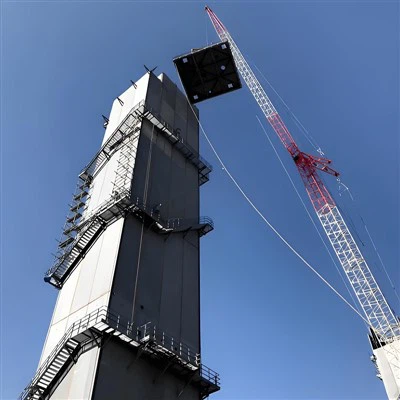
The type of technology used in the oxygen plant also impacts the space it needs. Cryogenic oxygen plants, which use the process of liquefying air and then separating its components by distillation, are usually larger. This is because they need large cold boxes for the cryogenic process, as well as additional equipment for refrigeration.
Non - cryogenic plants, such as pressure swing adsorption (PSA) plants, are generally more compact. They work by using adsorbent materials to separate oxygen from other gases in the air under pressure. A PSA plant with a moderate production capacity can be set up in a relatively small area, making it a great option for businesses with limited space.
Storage Requirements
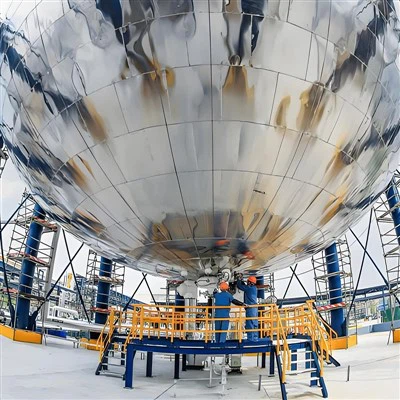
Don't forget about storage! Oxygen produced by the plant needs to be stored safely. If you're dealing with a large - scale industrial operation, you'll need big storage tanks. These tanks can take up a significant amount of space, especially if you need to store a large volume of oxygen for continuous supply.
For example, in a Copper Mine Oxygen - enriched Air Separation Unit, where a constant and large supply of oxygen is required, the storage tanks can be as large as several meters in diameter and tens of meters in length.
Auxiliary Equipment
There's also auxiliary equipment that needs to be considered. This includes things like cooling towers, electrical panels, and control rooms. Cooling towers are essential for cryogenic plants to maintain the low temperatures required for the separation process, and they can be quite large. Electrical panels and control rooms need to be located close to the main equipment for easy monitoring and operation, adding to the overall space requirements.
Space Planning Tips
Layout Design
When planning the space for your oxygen plant, it's crucial to have a well - thought - out layout. You want to ensure that there's easy access to all equipment for maintenance and repairs. Leave enough space between different components to prevent overcrowding and to allow for proper ventilation.
For example, place the air intake far from any potential sources of pollution to ensure the quality of the incoming air. And make sure that the storage area is separated from the production area to minimize safety risks.
Future Expansion
Think about the future. If you anticipate that your business will grow and you'll need to increase the production capacity of your oxygen plant, leave some extra space. This can save you a lot of headaches down the road when you don't have to tear down existing structures to make room for new equipment.
Case Studies
Let's take a look at a couple of real - world examples to better understand the space requirements.
Small - Scale Medical Oxygen Plant
A local hospital decided to install a small medical oxygen plant to ensure a reliable supply of oxygen for its patients. The plant had a production capacity of 8 cubic meters per hour. The hospital allocated a room of about 15 square meters. This room was just big enough to house the PSA oxygen generator, a small storage cylinder, and some basic control equipment. The hospital was able to keep the plant close to the patient wards for easy distribution, and the compact size of the plant made it a perfect fit.
Large - Scale Industrial Oxygen Plant for Metal Production
A large metal production company needed an oxygen plant to support its manufacturing processes. They opted for a cryogenic oxygen plant with a production capacity of 800 cubic meters per hour. The plant required a large industrial - scale building of approximately 600 square meters. This included the main cryogenic equipment, a large storage area for liquid oxygen, cooling towers, and a control room. The layout was designed to ensure smooth operation and easy access for maintenance. You can find more about Oxygen Plants For Metal Production on our website.
Conclusion
So, as you can see, the space requirements for an oxygen plant can vary widely depending on production capacity, technology, storage needs, and auxiliary equipment. It's essential to carefully assess your specific requirements before deciding on the size and layout of your oxygen plant.
If you're interested in learning more about oxygen plants or getting a custom - designed solution for your business, I'm here to help. Feel free to reach out to discuss your needs and how we can provide the perfect oxygen plant to fit your space and production requirements. Whether it's a small medical plant or a large - scale industrial one, we've got you covered.
References
- Smith, J. (2020). "Oxygen Plant Design and Operation". Industrial Gas Journal.
- Johnson, A. (2019). "Space Considerations for Oxygen Production Facilities". Engineering Today.