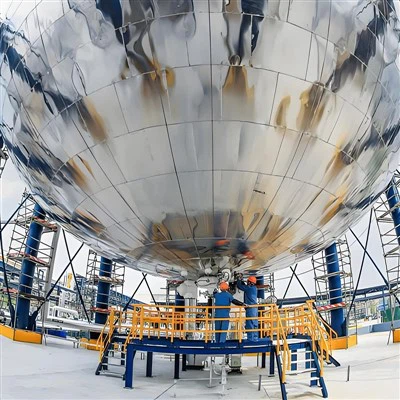
Filters play a crucial and multi - faceted role in cryogenic Air Separation Units (ASU). As a leading cryogenic ASU supplier, we have in - depth knowledge of how these filters contribute to the efficient, reliable, and safe operation of the entire system.
1. Protecting the Equipment
In a cryogenic ASU, there are numerous components that are highly sensitive to contaminants. The first and foremost role of filters is to protect the expensive and delicate equipment from damage.
The compressors in a cryogenic ASU are one of the key components. They compress the incoming air to high pressures. Any solid particles, such as dust, sand, or rust, present in the air can cause abrasion on the compressor blades. This abrasion not only reduces the efficiency of the compressor but also shortens its service life. By installing high - quality air intake filters, we can remove these solid particles before they enter the compressor. For example, a well - designed particulate filter with a high filtration efficiency can capture particles as small as a few microns, ensuring that the compressor operates smoothly.
The heat exchangers in a cryogenic ASU are also vulnerable to contamination. These heat exchangers are responsible for cooling the compressed air to cryogenic temperatures. If contaminants enter the heat exchanger, they can clog the narrow channels, reducing the heat transfer efficiency. This can lead to an increase in energy consumption and a decrease in the overall performance of the ASU. Filters prevent these contaminants from reaching the heat exchangers, thus maintaining their optimal operation.
2. Ensuring Product Purity
One of the main purposes of a cryogenic ASU is to produce high - purity gases such as oxygen, nitrogen, and argon. Filters are essential for achieving and maintaining the desired product purity.
The raw air contains various impurities, including water vapor, carbon dioxide, hydrocarbons, and other trace gases. These impurities can have a significant impact on the purity of the final products. For instance, water vapor can freeze at cryogenic temperatures and form ice, which can block the flow paths in the ASU. Carbon dioxide can also solidify and cause similar problems. Hydrocarbons, on the other hand, can pose a safety hazard as they can accumulate in the system and potentially cause an explosion.
Adsorption filters are commonly used in cryogenic ASUs to remove these impurities. Molecular sieve adsorbents are often employed to selectively adsorb water vapor, carbon dioxide, and some hydrocarbons. These adsorbents have a large surface area and specific pore sizes that allow them to trap the target molecules. By removing these impurities before the air enters the distillation columns, we can ensure that the final products meet the required purity standards. For example, in a medical oxygen production ASU, high - purity oxygen is required for patient use. The proper functioning of filters is crucial to remove all potential contaminants and produce oxygen with a purity of over 99%.
3. Improving Energy Efficiency
Filters can also contribute to the energy efficiency of a cryogenic ASU. When the equipment in the ASU is protected from contamination, it can operate more efficiently, which in turn reduces energy consumption.
As mentioned earlier, clean compressors and heat exchangers operate more efficiently. A compressor with clean blades can compress the air with less energy input compared to a compressor with abraded blades. Similarly, a heat exchanger with unclogged channels can transfer heat more effectively, reducing the energy required for cooling.
Moreover, by removing impurities such as water vapor and carbon dioxide early in the process, the load on the subsequent cryogenic separation processes is reduced. This means that less energy is needed to cool the air to the required cryogenic temperatures and to separate the different components. For example, if water vapor is not removed, it will freeze in the system, and additional energy will be required to melt it or to prevent its accumulation.
4. Enhancing Safety
Safety is of utmost importance in any cryogenic ASU operation. Filters play a vital role in enhancing safety by removing potentially hazardous contaminants.
Hydrocarbons, as mentioned before, are a major safety concern in cryogenic ASUs. They can accumulate in the distillation columns and form explosive mixtures. By using hydrocarbon filters, we can reduce the concentration of hydrocarbons in the incoming air to a safe level. These filters typically use activated carbon or other adsorbents to trap the hydrocarbons.
In addition, filters can also prevent the entry of corrosive substances into the system. Corrosion can weaken the structural integrity of the equipment, leading to potential leaks and failures. By removing corrosive contaminants such as sulfur compounds and acidic gases, filters help to ensure the long - term safety and reliability of the ASU.
5. Types of Filters Used in Cryogenic ASUs
There are several types of filters used in cryogenic ASUs, each with its specific function.
- Particulate Filters: These filters are used to remove solid particles from the incoming air. They can be made of various materials such as fiberglass, paper, or synthetic fibers. Particulate filters are usually rated based on their efficiency in capturing particles of different sizes. For example, a High - Efficiency Particulate Air (HEPA) filter can capture over 99.97% of particles with a size of 0.3 microns or larger.
- Adsorption Filters: As mentioned earlier, adsorption filters are used to remove impurities such as water vapor, carbon dioxide, and hydrocarbons. Molecular sieve adsorbents are commonly used in these filters. They work by adsorbing the target molecules on their surface. The adsorption process is reversible, and the adsorbents can be regenerated by heating or depressurizing.
- Coalescing Filters: Coalescing filters are used to remove liquid aerosols from the air. They work by causing the small liquid droplets to coalesce into larger droplets, which can then be separated from the air by gravity or other means. Coalescing filters are often used in the compressor after - coolers to remove oil and water aerosols.
Conclusion
In conclusion, filters are an indispensable part of cryogenic ASUs. They protect the equipment, ensure product purity, improve energy efficiency, and enhance safety. As a cryogenic ASU supplier, we understand the critical role of filters in the overall performance of the system. We offer a wide range of high - quality filters that are specifically designed for cryogenic ASU applications.
If you are in the market for a Cryogenic Air Separation Unit, Cryogenic Equipment, or a Gas Cryogenic Air Separation Plant, and you want to ensure the best performance and reliability of your system, we are here to help. Our team of experts can provide you with the most suitable filter solutions and comprehensive technical support. Contact us today to start the procurement and negotiation process, and let us work together to meet your specific requirements.


References
- Kohl, A. L., & Nielsen, R. B. (1997). Gas Purification. Gulf Publishing Company.
- Walas, S. M. (1985). Chemical Process Equipment: Selection and Design. Butterworth - Heinemann.
- Perry, R. H., & Green, D. W. (1997). Perry's Chemical Engineers' Handbook. McGraw - Hill.