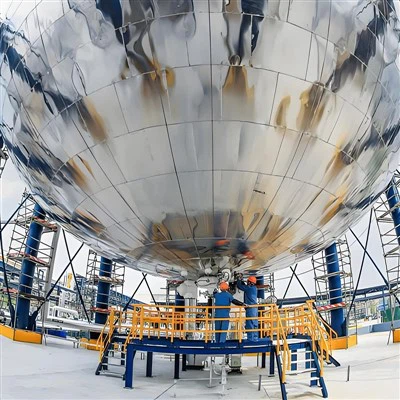
Yo, what's up everyone! I'm stoked to chat with you about how carbon removal plants are making a huge difference in the fight against climate change. As a supplier of carbon removal plants, I've seen firsthand the impact these bad boys can have. So, let's dive right in!
First off, let's talk about why we even need carbon removal plants in the first place. We all know that climate change is a real thing, and it's mainly caused by the excess carbon dioxide (CO2) in the atmosphere. This CO2 comes from burning fossil fuels like coal, oil, and gas, as well as deforestation and other human activities. The more CO2 there is in the atmosphere, the more heat it traps, leading to rising global temperatures, melting ice caps, and more extreme weather events.
That's where carbon removal plants come in. These plants are designed to capture CO2 from the air or from industrial emissions and store it safely underground or use it for other purposes. By removing CO2 from the atmosphere, we can help to slow down the rate of climate change and reduce its impacts.
There are a few different types of carbon removal plants out there. One type is the Co2 Air Separation Unit. This unit uses a process called air separation to separate CO2 from the air. It works by passing air through a series of filters and membranes that selectively capture CO2 molecules. Once the CO2 is captured, it can be compressed and stored underground or used in other industrial processes.
Another type of carbon removal plant is the Carbon Dioxide Manufacturing Plant. This plant uses a chemical process to convert CO2 into other useful products, such as methanol or synthetic fuels. By turning CO2 into something valuable, we can not only reduce its impact on the environment but also create new economic opportunities.
Of course, the most well-known type of carbon removal plant is the Carbon Removal Plant. This plant uses a variety of technologies to capture CO2 from industrial emissions or directly from the air. Some of these technologies include carbon capture and storage (CCS), direct air capture (DAC), and bioenergy with carbon capture and storage (BECCS).
Carbon capture and storage (CCS) is a process that involves capturing CO2 from industrial emissions, such as power plants or factories, and storing it underground in geological formations. This technology has been around for a while, but it's still relatively expensive and complex to implement. However, as the technology improves and the cost comes down, CCS has the potential to play a significant role in reducing CO2 emissions.
Direct air capture (DAC) is a newer technology that involves capturing CO2 directly from the air. This technology uses large fans to draw air into a capture device, where the CO2 is separated from the other gases using a chemical process. Once the CO2 is captured, it can be stored underground or used for other purposes. DAC is still in the early stages of development, but it has the potential to be a game-changer in the fight against climate change.
Bioenergy with carbon capture and storage (BECCS) is a process that involves growing crops or other biomass, burning them to produce energy, and capturing the CO2 emissions from the combustion process. The captured CO2 is then stored underground. BECCS has the potential to be a carbon-negative technology, meaning that it can remove more CO2 from the atmosphere than it produces. However, there are also some concerns about the environmental and social impacts of large-scale bioenergy production.
So, how do these carbon removal plants actually contribute to climate change mitigation? Well, for starters, they can help to reduce the amount of CO2 in the atmosphere. By capturing and storing CO2, we can prevent it from trapping heat and causing further global warming. This can help to slow down the rate of climate change and reduce its impacts on the environment and human health.
In addition to reducing CO2 emissions, carbon removal plants can also help to create new economic opportunities. For example, the production of synthetic fuels or other valuable products from CO2 can create jobs and stimulate economic growth. Carbon removal plants can also help to reduce our dependence on fossil fuels, which can have a positive impact on energy security and the environment.
Another way that carbon removal plants can contribute to climate change mitigation is by providing a way to offset emissions that are difficult to reduce. For example, some industries, such as aviation and shipping, have limited options for reducing their emissions. Carbon removal plants can provide a way to offset these emissions by capturing and storing CO2 from other sources.
Of course, carbon removal plants are not a silver bullet for climate change. They are just one part of a larger solution that also includes reducing emissions from fossil fuels, increasing the use of renewable energy, and improving energy efficiency. However, they can play an important role in helping us to achieve our climate goals and create a more sustainable future.


As a supplier of carbon removal plants, I'm excited to be part of this growing industry. I believe that these plants have the potential to make a real difference in the fight against climate change, and I'm committed to helping my customers to implement these technologies in a cost-effective and sustainable way.
If you're interested in learning more about carbon removal plants or are looking to purchase one for your business, I'd love to hear from you. Please don't hesitate to reach out to me to discuss your options and learn more about how we can help you to reduce your carbon footprint and contribute to a more sustainable future.
References:
- IPCC Special Report on Global Warming of 1.5°C
- International Energy Agency (IEA)
- Carbon Capture and Storage Association (CCSA)