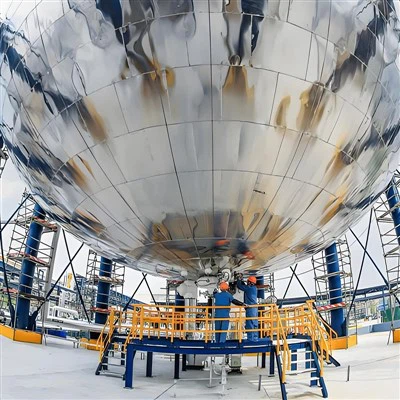
Cryogenic wind tunnels play a crucial role in aerospace research, automotive engineering, and various other fields. These facilities are designed to simulate high - speed flight conditions and test the aerodynamic performance of vehicles and components. The key to the operation of cryogenic wind tunnels lies in the use of cryogenic equipment, which can achieve extremely low temperatures. As a leading cryogenic equipment supplier, I am well - versed in the specific requirements of cryogenic equipment for cryogenic wind tunnels.
Temperature Control and Cooling Capacity
One of the primary requirements for cryogenic equipment in cryogenic wind tunnels is precise temperature control. Cryogenic wind tunnels typically operate at temperatures ranging from around 100 K to 200 K (-173°C to -73°C). To achieve and maintain these low temperatures, the cryogenic equipment must have a high - performance cooling system.
Our company offers advanced cooling systems that are specifically designed for cryogenic wind tunnel applications. These systems use a combination of refrigeration cycles and cryogenic fluids such as liquid nitrogen or liquid helium. The cooling capacity of the equipment needs to be carefully calculated based on the size of the wind tunnel, the flow rate of the test gas, and the desired temperature. For example, larger wind tunnels with higher flow rates will require more powerful cooling systems to ensure that the temperature remains stable throughout the testing process.
Flow Rate and Pressure Management
In addition to temperature control, the cryogenic equipment must also be able to manage the flow rate and pressure of the cryogenic fluid. The flow rate of the cryogenic fluid is directly related to the cooling capacity of the system. A higher flow rate can transfer more heat and achieve a faster cooling rate. However, it also requires more energy and may put additional stress on the equipment.
Pressure management is equally important. The cryogenic fluid needs to be maintained at a certain pressure to ensure proper flow and heat transfer. Our cryogenic equipment is equipped with state - of - the - art pressure control valves and pumps that can accurately regulate the pressure of the cryogenic fluid. This ensures that the cryogenic fluid can be delivered to the wind tunnel at the required pressure and flow rate, providing stable and efficient cooling.
Purity and Contamination Control
The purity of the cryogenic fluid is another critical requirement. Contaminants in the cryogenic fluid can cause blockages in the piping system, reduce the efficiency of the heat exchanger, and even damage the test models in the wind tunnel. Therefore, the cryogenic equipment must be able to ensure the high purity of the cryogenic fluid.
Our company's cryogenic equipment includes advanced purification systems. These systems use filters, adsorbents, and other purification techniques to remove impurities such as moisture, oxygen, and particulate matter from the cryogenic fluid. For example, molecular sieves can be used to adsorb moisture and other polar molecules, while activated carbon filters can remove organic contaminants. By maintaining the high purity of the cryogenic fluid, we can ensure the reliable operation of the cryogenic wind tunnel and the accuracy of the test results.
Safety and Reliability
Safety is of utmost importance in cryogenic wind tunnel operations. Cryogenic fluids are extremely cold and can cause severe frostbite if they come into contact with human skin. In addition, there is a risk of explosion if the cryogenic fluid leaks and mixes with air in the right proportions. Therefore, the cryogenic equipment must be designed with multiple safety features.

Our cryogenic equipment is equipped with leak detection systems, pressure relief valves, and emergency shutdown devices. The leak detection systems can quickly detect any leaks of the cryogenic fluid and trigger an alarm. The pressure relief valves can prevent over - pressurization of the system, while the emergency shutdown devices can stop the operation of the equipment in case of an emergency.
Reliability is also crucial. Cryogenic wind tunnel tests are often expensive and time - consuming. Any equipment failure can cause significant delays and financial losses. Our company uses high - quality materials and advanced manufacturing processes to ensure the reliability of our cryogenic equipment. We also provide regular maintenance and technical support to minimize the risk of equipment failure.
Specific Cryogenic Equipment for Cryogenic Wind Tunnels
Cryogenic Air Separation Plants
Cryogenic air separation plants are essential for cryogenic wind tunnels. These plants can separate air into its components, such as nitrogen, oxygen, and argon, at cryogenic temperatures. Gas Cryogenic Air Separation Plant and Liquid Air Separation Plant are two types of cryogenic air separation plants that we offer.

The gas cryogenic air separation plant is designed to produce high - purity gaseous nitrogen, oxygen, or argon. It uses a distillation process to separate the components of air based on their different boiling points. The liquid air separation plant, on the other hand, can produce liquid nitrogen, liquid oxygen, or liquid argon. These liquid products can be stored and transported more easily and are often used as the cryogenic fluid in cryogenic wind tunnels.
Cryogenic Air Separation Nitrogen
Cryogenic Air Separation Nitrogen is widely used in cryogenic wind tunnels. Nitrogen is an inert gas, which means it does not react with the test models or other materials in the wind tunnel. It is also relatively inexpensive and easy to produce.
Our cryogenic air separation nitrogen systems can produce high - purity nitrogen at cryogenic temperatures. The nitrogen can be used as the working fluid in the wind tunnel, providing a stable and controllable environment for the aerodynamic tests. The purity of the nitrogen can be adjusted according to the specific requirements of the test, ensuring the accuracy and reliability of the test results.
Conclusion
In conclusion, the cryogenic equipment requirements for cryogenic wind tunnels are complex and demanding. Precise temperature control, flow rate and pressure management, purity and contamination control, safety, and reliability are all key factors that need to be considered. As a cryogenic equipment supplier, we are committed to providing high - quality cryogenic equipment that meets the specific needs of cryogenic wind tunnel applications.
If you are involved in the design, construction, or operation of a cryogenic wind tunnel and are in need of cryogenic equipment, we invite you to contact us for procurement and negotiation. Our team of experts will be happy to provide you with detailed information and customized solutions.
References
- Shapiro, A. H. (1953). The Dynamics and Thermodynamics of Compressible Fluid Flow, Vol. 1. Wiley.
- Van Dalsem, W. R., & Gaffney, J. E. (1999). Cryogenic wind tunnels: History, status, and future directions. Progress in Aerospace Sciences, 35(4), 303 - 327.
- Ekkad, S. V., & Han, J. C. (2001). Gas turbine heat transfer and cooling technology. Taylor & Francis.