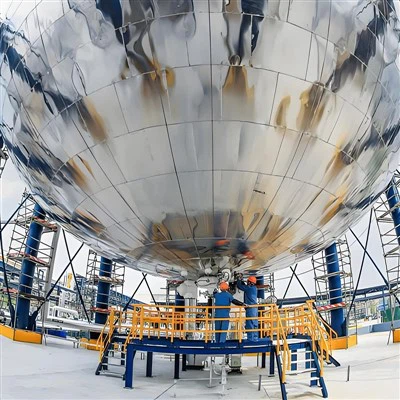
Hey there! As a supplier of CO2 Recovery Units, I often get asked about the monitoring parameters for these units. In this blog post, I'm gonna break down the key parameters you need to keep an eye on to ensure your CO2 Recovery Unit runs smoothly and efficiently.
1. Temperature
Temperature is a crucial parameter in a CO2 Recovery Unit. Different stages of the CO2 recovery process require specific temperature ranges to work effectively.
- Inlet Gas Temperature: The temperature of the incoming gas stream is important. If it's too high, it can affect the efficiency of the subsequent separation and purification processes. For example, high temperatures can reduce the solubility of CO2 in the absorbent used in some recovery methods. On the other hand, if it's too low, it might cause issues like condensation or freezing in the pipes. Usually, we aim to keep the inlet gas temperature within a range that's suitable for the specific technology of the recovery unit.
- Absorber and Stripper Temperatures: In absorption-based CO2 recovery systems, the absorber and stripper columns have optimal temperature ranges. The absorber needs to be at a relatively low temperature to facilitate the absorption of CO2 into the absorbent. The stripper, on the other hand, operates at a higher temperature to release the CO2 from the absorbent. Monitoring these temperatures closely helps maintain the proper balance between absorption and desorption, ensuring high CO2 recovery rates.
2. Pressure
Pressure also plays a vital role in the operation of a CO2 Recovery Unit.
- Inlet Gas Pressure: The pressure of the incoming gas is a key factor. Adequate pressure is necessary to drive the gas through the various components of the recovery unit. If the pressure is too low, the gas might not flow properly, leading to reduced recovery efficiency. High inlet pressure, however, can put stress on the equipment and increase the risk of leaks or damage.
- Column Pressures: In columns such as the absorber and stripper, maintaining the right pressure is essential. The pressure in the absorber affects the solubility of CO2 in the absorbent, while the pressure in the stripper influences the release of CO2. Any significant deviation from the optimal pressure can result in poor separation and lower CO2 purity.
3. Flow Rates
Monitoring the flow rates of different fluids in the CO2 Recovery Unit is essential for its proper functioning.


- Gas Flow Rate: The flow rate of the incoming gas determines the amount of CO2 that can be processed. If the gas flow rate is too high, the recovery unit might not be able to handle it efficiently, leading to incomplete separation. A low gas flow rate, on the other hand, might result in underutilization of the equipment and lower overall productivity.
- Absorbent Flow Rate: In absorption-based systems, the flow rate of the absorbent is critical. It needs to be adjusted according to the gas flow rate and the CO2 concentration in the gas. A proper absorbent flow rate ensures effective absorption of CO2 and prevents issues like flooding or channeling in the absorber column.
4. CO2 Concentration
Measuring the CO2 concentration at different points in the CO2 Recovery Unit is fundamental.
- Inlet CO2 Concentration: Knowing the CO2 concentration in the incoming gas helps in determining the appropriate operating conditions for the recovery unit. It also allows for better estimation of the potential CO2 recovery.
- Outlet CO2 Concentration: Monitoring the CO2 concentration at the outlet of the recovery unit is crucial to ensure that the recovered CO2 meets the required purity standards. If the outlet CO2 concentration is too low, it might indicate problems with the separation process, such as inefficient absorption or desorption.
5. Purity of Recovered CO2
The purity of the recovered CO2 is a key performance indicator for a CO2 Recovery Unit.
- Impurity Levels: Apart from CO2, the recovered gas might contain impurities such as nitrogen, oxygen, and trace amounts of other gases. Monitoring the levels of these impurities is important, especially if the recovered CO2 is intended for specific applications like food and beverage industries or enhanced oil recovery. High impurity levels can render the recovered CO2 unsuitable for these applications.
6. pH (in Absorption Systems)
In absorption-based CO2 recovery systems that use aqueous absorbents, monitoring the pH of the absorbent is important.
- Absorbent Degradation: The pH of the absorbent can affect its ability to absorb CO2. Over time, the absorbent might degrade, leading to changes in pH. Monitoring the pH allows for timely adjustment of the absorbent properties, such as adding fresh absorbent or adjusting the chemical composition, to maintain its effectiveness.
7. Equipment Performance
Monitoring the performance of the various equipment in the CO2 Recovery Unit is also essential.
- Pump Performance: Pumps are used to circulate fluids in the recovery unit. Monitoring parameters such as pump flow rate, pressure, and power consumption can help detect any issues with the pumps, such as wear and tear or blockages.
- Heat Exchanger Performance: Heat exchangers are used to transfer heat between different fluids in the recovery unit. Monitoring the temperature difference across the heat exchanger and the heat transfer efficiency can indicate if the heat exchanger is operating properly. Any decrease in performance might require cleaning or maintenance.
Conclusion
In conclusion, monitoring these parameters is crucial for the efficient and reliable operation of a CO2 Recovery Unit. By keeping a close eye on temperature, pressure, flow rates, CO2 concentration, purity, pH (in absorption systems), and equipment performance, you can ensure that your CO2 Recovery Unit operates at its best, maximizing CO2 recovery and minimizing operational costs.
If you're in the market for a CO2 Recovery Unit, Commercial CO2 Capture Plant, or CO2 Gas Recovery Plant, we're here to help. We offer high-quality, reliable CO2 recovery solutions tailored to your specific needs. Reach out to us if you want to discuss your requirements and explore how our products can benefit your business.
References
- Perry, R. H., & Green, D. W. (Eds.). (2008). Perry's Chemical Engineers' Handbook. McGraw-Hill.
- Kohl, A. L., & Nielsen, R. B. (1997). Gas Purification. Gulf Publishing Company.