As a supplier of a CO2 manufacturing plant, I understand the importance of exploring various packaging options for CO2 produced in industrial settings. CO2, a by - product of many manufacturing processes, has a wide range of applications, from food and beverage carbonation to industrial refrigeration. Choosing the right packaging option is crucial for ensuring the safe, efficient, and cost - effective transportation and storage of this valuable gas.
Compressed Gas Cylinders
One of the most common packaging options for CO2 is compressed gas cylinders. These cylinders are made of high - strength steel or aluminum and are designed to hold CO2 at high pressures. Compressed CO2 cylinders come in various sizes, ranging from small portable cylinders used in home brewing to large industrial cylinders that can hold hundreds of kilograms of CO2.
The advantage of using compressed gas cylinders is their portability. They can be easily transported to different locations, making them ideal for small - scale users and applications where a limited amount of CO2 is required. Additionally, compressed gas cylinders are relatively easy to handle and can be connected directly to the equipment that uses CO2, such as beverage dispensers or laser cutting machines.
However, there are also some drawbacks to using compressed gas cylinders. The high - pressure storage of CO2 poses a safety risk, and proper handling and storage procedures must be followed to prevent accidents. Moreover, the cost of purchasing and maintaining a fleet of cylinders can be significant, especially for large - scale users.
Liquid CO2 Tanks
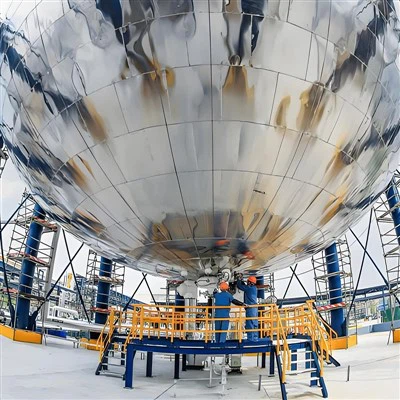
Another popular packaging option is liquid CO2 tanks. CO2 can be liquefied by cooling it to a temperature below - 78.5°C at atmospheric pressure or by applying pressure at higher temperatures. Liquid CO2 has a much higher density than gaseous CO2, which means that more CO2 can be stored in a given volume.
Liquid CO2 tanks are typically larger than compressed gas cylinders and are used for applications that require a large amount of CO2, such as industrial food freezing and carbonated beverage production. These tanks are insulated to maintain the low temperature required to keep CO2 in its liquid state.
The main advantage of liquid CO2 tanks is their high storage capacity. They can store large quantities of CO2, reducing the frequency of refills and transportation costs. Additionally, liquid CO2 can be easily transferred from the tank to the end - use equipment using pumps and pipelines.

On the other hand, liquid CO2 tanks require more complex handling and storage facilities. They need to be equipped with pressure - relief valves and temperature sensors to ensure safe operation. The cost of installing and maintaining a liquid CO2 storage system can be substantial, and it may not be suitable for small - scale users.
Dry Ice Packaging
Dry ice, which is solid CO2, is also a viable packaging option. Dry ice is produced by expanding liquid CO2 into a low - pressure chamber, causing it to rapidly cool and solidify. It is commonly used for food preservation, shipping of temperature - sensitive products, and special effects in the entertainment industry.
Dry ice has the advantage of being a convenient and cost - effective way to transport and store CO2 in a solid form. It sublimates directly from a solid to a gas at - 78.5°C, eliminating the need for handling liquid or gaseous CO2. This makes it a safer option in some cases, especially for applications where direct contact with CO2 gas or liquid is not desired.
However, dry ice has a limited shelf - life due to its sublimation process. It must be stored in well - insulated containers to minimize sublimation losses. Also, the production of dry ice requires specialized equipment, and the availability of dry ice may be limited in some areas.
Bulk CO2 Pipelines
For large - scale manufacturing plants located in close proximity to end - users, bulk CO2 pipelines can be an efficient packaging and distribution option. Pipelines allow for the continuous and direct transfer of CO2 from the manufacturing plant to the end - use facility.
Bulk CO2 pipelines offer several advantages. They provide a reliable and uninterrupted supply of CO2, reducing the need for storage and transportation of packaged CO2. The cost of transporting CO2 through pipelines can be lower than other methods, especially for long - term and high - volume contracts.
However, building and maintaining a CO2 pipeline network is a capital - intensive project. It requires significant upfront investment in pipeline construction, right - of - way acquisition, and safety systems. Additionally, pipelines are generally fixed in location, which limits their flexibility compared to other packaging options.
Considerations for Choosing the Right Packaging Option
When choosing a packaging option for CO2 from a manufacturing plant, several factors need to be considered.
Volume of CO2 Required: The amount of CO2 needed by the end - user is a crucial factor. Small - scale users may find compressed gas cylinders or dry ice more suitable, while large - scale users may benefit from liquid CO2 tanks or bulk pipelines.
Application Requirements: Different applications have different requirements for the state and purity of CO2. For example, the food and beverage industry requires high - purity CO2, and the packaging option should ensure that the CO2 remains pure during storage and transportation.
Safety: Safety is of utmost importance when dealing with CO2. The chosen packaging option should comply with all relevant safety standards and regulations. This includes proper handling, storage, and transportation procedures.
Cost: The cost of the packaging option, including the purchase of equipment, transportation, and maintenance, should be considered. A cost - benefit analysis should be conducted to determine the most economical option for the specific application.
Environmental Impact: With the increasing focus on environmental sustainability, the environmental impact of the packaging option should also be taken into account. For example, the energy consumption associated with the production and transportation of CO2 in different packaging forms can vary significantly.
As a supplier of a CO2 manufacturing plant, we offer a range of solutions to meet your specific needs. Our Commercial CO2 Capture Plant is designed to efficiently capture and purify CO2 from industrial processes. Our CO2 Gas Recovery Plant can recover CO2 from waste gas streams, reducing emissions and providing a sustainable source of CO2. And our Co2 Production Plant ensures the high - quality production of CO2 for various applications.
If you are interested in learning more about our CO2 packaging options or our manufacturing plants, we invite you to contact us for a detailed discussion. We are committed to providing you with the best solutions for your CO2 needs, ensuring safety, efficiency, and cost - effectiveness.
References
- CEN/TR 16906:2016, “Guidelines for the safe use of carbon dioxide”.
- NFPA 55, “Compressed Gases and Cryogenic Fluids Code”.
- American Gas Association (AGA), “Safety Standard for the Storage and Handling of Carbon Dioxide”.