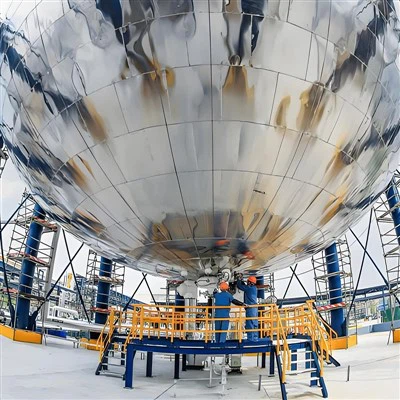
Hey there! As a supplier of oxygen liquid plants, I've seen firsthand how crucial backup systems are in these facilities. In this blog, I'll be diving into the different backup systems in an oxygen liquid plant and why they're so important.
First off, let's talk about why backup systems are necessary. An oxygen liquid plant is a complex operation that involves a lot of equipment and processes. Any disruption in the power supply, cooling system, or other critical components can lead to a shutdown of the plant, which can have serious consequences. Not only can it result in a loss of production, but it can also pose a safety risk to the workers and the surrounding environment. That's where backup systems come in – they provide a safety net to ensure that the plant can continue to operate in the event of an emergency.
Power Backup Systems
One of the most important backup systems in an oxygen liquid plant is the power backup system. The plant requires a continuous supply of electricity to run its compressors, pumps, and other equipment. Without power, the plant will shut down, and the liquid oxygen will start to warm up and turn into gas, which can cause pressure build-up and potentially lead to an explosion.
There are several types of power backup systems that can be used in an oxygen liquid plant. The most common type is a generator. Generators can be powered by diesel, natural gas, or other fuels and can provide a reliable source of electricity in the event of a power outage. They can be sized to meet the specific needs of the plant and can be configured to automatically start up when the main power supply fails.
Another type of power backup system is an uninterruptible power supply (UPS). UPS systems are designed to provide short-term power to critical equipment in the event of a power outage. They typically use batteries to store energy and can provide power for a few minutes to several hours, depending on the size of the system. UPS systems are often used to protect sensitive electronic equipment, such as control systems and monitoring devices, from power surges and outages.


Cooling Backup Systems
In addition to power backup systems, oxygen liquid plants also require cooling backup systems. The plant uses a refrigeration system to cool the oxygen gas and turn it into a liquid. If the cooling system fails, the liquid oxygen will start to warm up and turn into gas, which can cause pressure build-up and potentially lead to an explosion.
There are several types of cooling backup systems that can be used in an oxygen liquid plant. The most common type is a redundant refrigeration system. Redundant refrigeration systems consist of two or more refrigeration units that are connected in parallel. If one unit fails, the other unit(s) can continue to operate, ensuring that the plant can continue to cool the oxygen gas and turn it into a liquid.
Another type of cooling backup system is a standby cooling system. Standby cooling systems are designed to provide cooling in the event of a failure of the main refrigeration system. They typically use a different type of cooling technology, such as air cooling or water cooling, and can be sized to meet the specific needs of the plant.
Instrumentation and Control Backup Systems
Oxygen liquid plants also require instrumentation and control backup systems to ensure that the plant can be operated safely and efficiently. The plant uses a variety of sensors and control devices to monitor and control the temperature, pressure, and other parameters of the liquid oxygen. If these sensors and control devices fail, the plant may not be able to operate safely, and the liquid oxygen may start to warm up and turn into gas, which can cause pressure build-up and potentially lead to an explosion.
There are several types of instrumentation and control backup systems that can be used in an oxygen liquid plant. The most common type is a redundant control system. Redundant control systems consist of two or more control units that are connected in parallel. If one unit fails, the other unit(s) can continue to operate, ensuring that the plant can be operated safely and efficiently.
Another type of instrumentation and control backup system is a standby control system. Standby control systems are designed to provide control in the event of a failure of the main control system. They typically use a different type of control technology, such as a programmable logic controller (PLC) or a distributed control system (DCS), and can be sized to meet the specific needs of the plant.
Safety Backup Systems
Finally, oxygen liquid plants require safety backup systems to ensure that the plant can be operated safely in the event of an emergency. The plant uses a variety of safety devices, such as pressure relief valves, emergency shutdown systems, and fire suppression systems, to protect the workers and the surrounding environment from the hazards associated with liquid oxygen.
There are several types of safety backup systems that can be used in an oxygen liquid plant. The most common type is a redundant safety system. Redundant safety systems consist of two or more safety devices that are connected in parallel. If one device fails, the other device(s) can continue to operate, ensuring that the plant can be operated safely in the event of an emergency.
Another type of safety backup system is a standby safety system. Standby safety systems are designed to provide safety in the event of a failure of the main safety system. They typically use a different type of safety technology, such as a passive safety device or an active safety system, and can be sized to meet the specific needs of the plant.
Conclusion
In conclusion, backup systems are essential for the safe and efficient operation of an oxygen liquid plant. Power backup systems, cooling backup systems, instrumentation and control backup systems, and safety backup systems all play a crucial role in ensuring that the plant can continue to operate in the event of an emergency. By investing in reliable backup systems, oxygen liquid plant operators can minimize the risk of downtime, protect their workers and the surrounding environment, and ensure the long-term viability of their business.
If you're in the market for an oxygen liquid plant or need to upgrade your existing backup systems, I'd be happy to help. As a supplier of Liquid Oxygen Gas Plant, Liquid Oxygen Generation Plant, and LOX Plant, I have the expertise and experience to provide you with the best solutions for your needs. Contact me today to learn more about our products and services and to discuss your specific requirements.
References
- Perry, R. H., & Green, D. W. (Eds.). (2008). Perry's Chemical Engineers' Handbook. McGraw-Hill.
- Ludwig, E. E. (2001). Applied Process Design for Chemical and Petrochemical Plants. Gulf Professional Publishing.
- API RP 521. (2014). Pressure-relieving and Depressuring Systems. American Petroleum Institute.